1 Holding Your Breath During Difficult Postures
The single most common unconscious habit among beginners is holding the breath the exact moment a posture becomes physically demanding. When you lock your breath during a pose like Boat Pose or Warrior III, you trigger an immediate sympathetic stress response, depriving your working muscles of essential oxygen and increasing internal vascular pressure.
Key Details & Technique
- Consciously prioritize: continuous, steady respiration over achieving physical depth.
- If you: cannot maintain a smooth inhalation and exhalation, you have gone too deep into the posture.
- Learn foundational: breathing mechanics in our Ujjayi Pranayama guide.
Pro Tip:
"Whenever you enter a new posture, make your very first action a deliberate, deep exhalation. This instantly relaxes tension around your jaw and neck."
2 The Comparison Trap: Forcing Aesthetic Shapes
In an era of performative social media images, beginners frequently judge the validity of their yoga practice by how closely their external physical shape resembles an instructor or photograph. This comparison trap leads practitioners to force stiff joints beyond their healthy range of motion, risking severe soft tissue injuries.
Key Details & Technique
- Always remember: that yoga is an internal somatic practice, not an external aesthetic performance.
- Your skeletal: anatomy is entirely unique; what looks beautiful on one body may be anatomically impossible for another.
- Explore safe: modifications in our complete Yoga Poses Library.
3 Refusing to Use Blocks, Straps, and Bolsters
Many beginners harbor the false belief that utilizing yoga blocks or straps is a sign of physical inadequacy or beginner status. In reality, refusing to use props when your hamstrings or hips are tight forces your lumbar spine to round dangerously in forward folds and compromises your structural alignment.
Key Details & Technique
- Advanced yogis: use props enthusiastically because they understand that bringing the floor up to meet your hands allows for therapeutic, flawless anatomical alignment.
- Build a: supportive home practice with our 30-day Beginner Yoga Challenge.
Pro Tip:
"Keep two cork or foam blocks at the top of your mat during every practice. Having them within arm's reach removes the friction of grabbing them mid-flow."
4 Hyperextending Sensitive Knee and Elbow Joints
For individuals with natural joint laxity or hyper-mobility, locking out the knees in standing forward folds or locking the elbows in downward dog is a common default. Hyperextending transfers the physical load directly from your supporting muscles into your fragile joint ligaments, leading to chronic instability over time.
Key Details & Technique
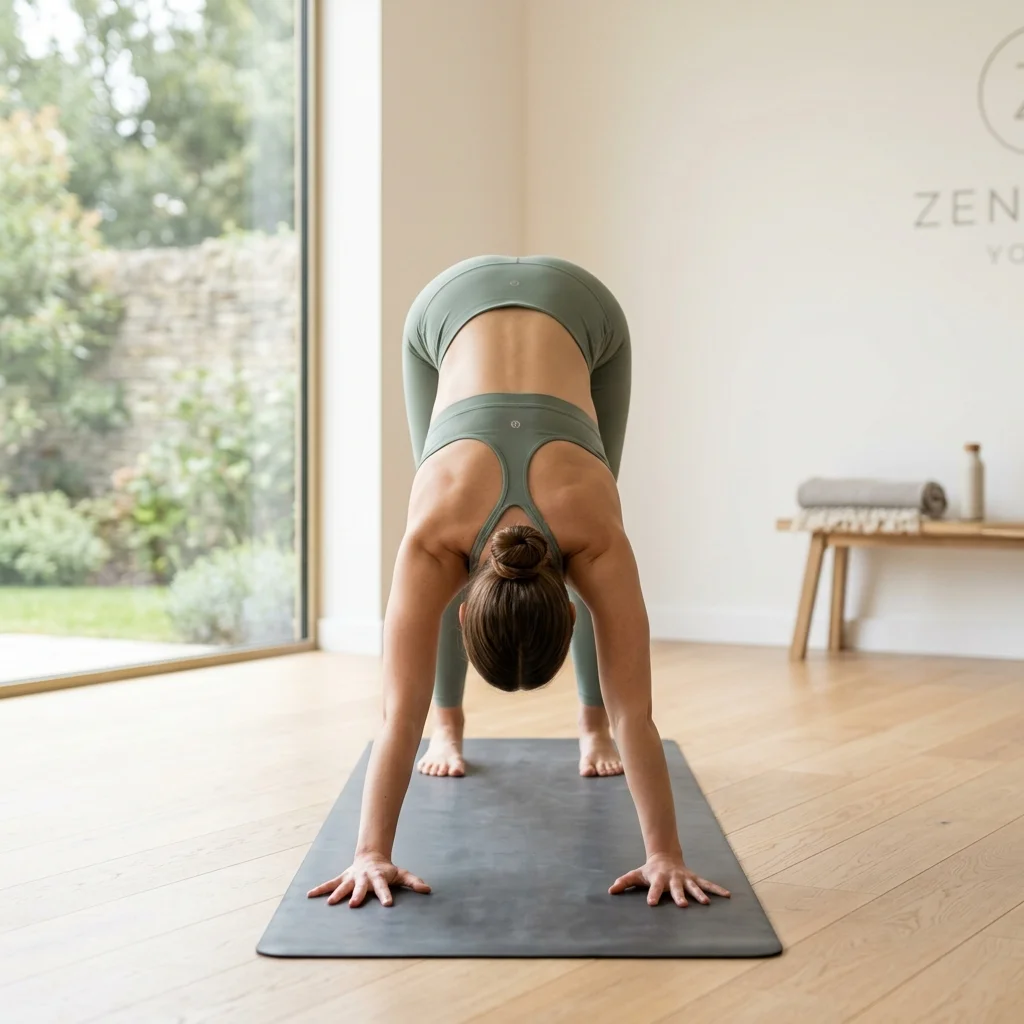
- Always maintain: a micro-bend in your knees and elbows during standing and weight-bearing postures, actively engaging your quadriceps and biceps to support the joint structure.
- Check out: proper standing alignment in our Triangle Pose (Trikonasana] tutorial.
5 Skipping or Rushing Through Final Savasana
When busy schedules press upon us, skipping the final resting posture (Savasana] to rush back to our daily demands is incredibly tempting. However, Savasana is arguably the most vital posture of the entire practice, serving as the neurological bridge where your central nervous system assimilates the physical changes of your flow.
Key Details & Technique
- Treat your: final rest as an absolute non-negotiable cornerstone of your practice, dedicating at least three to five minutes to complete physical stillness.
- For deeply: restorative evening routines, explore our Yoga for Better Sleep Program.
Pro Tip:
"Place a rolled blanket or bolster underneath your knees during Savasana. This instantly releases residual tension in your lower lumbar spine, allowing for profound relaxation."
✨ Summary & Next Steps
Stepping onto your yoga mat with awareness and humility is the secret to building an empowering, lifelong practice. By releasing the need to hold your breath, avoiding the comparison trap, embracing supportive props with pride, protecting your joints from hyperextension, and honoring the sacred stillness of Savasana, you safeguard your body and mind. Review these principles before your next flow and notice how much more joyous your practice becomes. Ready to establish a bulletproof beginner foundation? Join our free 30-Day Beginner Yoga Challenge today!
Frequently Asked Questions
Elena Rostova
Elena Rostova is an accredited yoga educator and anatomy specialist with over 15 years of clinical experience. She focuses on functional biomechanics and injury prevention, translating complex anatomy into accessible guidance for safe, sustainable practice.