1 The Architectural Blueprint of the Psoas Major
The psoas major originates on the lateral surfaces of your twelfth thoracic vertebra and all five lumbar vertebrae. From this spinal attachment, it travels down through the pelvic bowl, joining with the iliacus muscle before inserting onto the lesser trochanter of your thigh bone (femur]. Because it traverses multiple major joints—the lumbar spine, the sacroiliac joint, and the hip socket—its structural health dictates the overall stability and pelvic alignment of your entire body.
Key Details & Technique
- When the: psoas is functionally balanced, it acts as an internal guy-wire, effortlessly suspending the spine and allowing for fluid bipedal locomotion.
- However, when: chronically tight, it pulls the lumbar vertebrae forward and downward, creating an exaggerated anterior pelvic tilt and severe lower back compression.
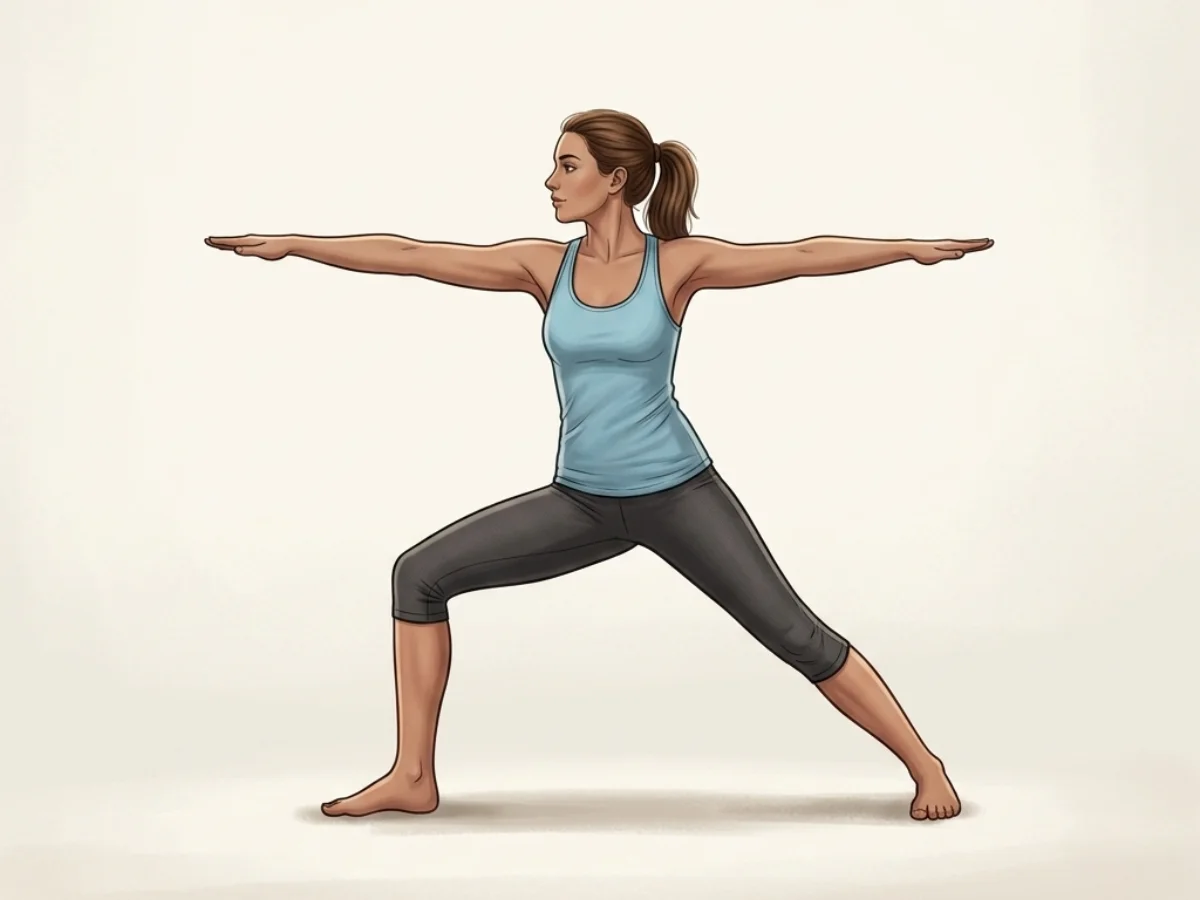
- To see: how hip alignment influences fundamental standing postures, explore our breakdown of Warrior I (Virabhadrasana I].
Pro Tip:
"To test if your hip flexors are chronically tight, lie on your back on a table and pull one knee to your chest while letting the other leg hang off the edge (the Thomas Test]. If the hanging thigh lifts off the table, your psoas is shortened."
2 How Modern Desk Life Traps Stress in the Hips
From an evolutionary standpoint, the psoas is fundamentally tied to our primal survival mechanisms. When our central nervous system perceives danger, the psoas immediately contracts to pull our knees toward our chest into the protective fetal position. In modern society, we rarely flee from physical predators, but our bodies react identically to psychological stressors—looming work deadlines, traffic congestion, and digital overload. This constant low-grade fight-or-flight activation keeps the psoas in a perpetual state of hyper-vigilance.
Key Details & Technique
- Compounding this: neurological tension is the physical reality of sitting in chairs for eight to twelve hours daily.
- In a: seated posture, the hip flexors remain bent at a 90-degree angle.
- Over time,: the surrounding fascial tissue adapts by shortening and adhering, locking the pelvis into a restrictive pattern.
- For targeted: relief routines, check out our 4-week Yoga for Back Pain program.
3 Active Release vs. Passive Stretching: The Nuance of Hip Openers
When most yogis realize their hips are tight, their immediate instinct is to force themselves into aggressive passive stretches like Pigeon Pose or extreme lunges. However, aggressively yanking a hyper-vigilant, exhausted psoas muscle often triggers the stretch reflex—an involuntary contraction designed to protect the muscle fibers from tearing. This is why you might stretch your hips every day but never experience lasting openness.
Key Details & Technique
- Instead of: forcing depth, effective psoas release requires a combination of gentle somatic movement and active reciprocal inhibition.
- By engaging: the opposing muscle group—specifically the gluteus maximus and hamstrings—you signal to the nervous system that it is safe for the hip flexors to let go.
- Learn how: to engage your posterior chain effectively in our Bridge Pose (Setu Bandha Sarvangasana] tutorial.
Pro Tip:
"In Low Lunge (Anjaneyasana], avoid collapsing all your weight forward into your front hip. Instead, actively squeeze your back glute and gently tuck your tailbone downward; you will feel a vastly superior stretch in the upper psoas."
4 Restorative Psoas Release: Constructive Rest Position
One of the most profoundly effective positions for releasing deep psoas tension requires absolutely zero stretching effort. It is known as Constructive Rest Position (CRP]. To practice CRP, lie flat on your back with your knees bent and feet resting on the floor about mat-width apart. Allow your knees to rest gently inward against one another so your legs require zero muscular effort to remain standing.
Key Details & Technique
- Rest your: hands on your lower abdomen and remain in this posture for 10 to 15 minutes while breathing deeply into your belly.
- In this: gravity-neutral orientation, the psoas is completely unloaded, allowing the deep fascial tissue to rehydrate and unwind at its own organic pace.
- Explore more: soothing evening practices in our Yoga for Better Sleep challenge.
5 Integrating Functional Hip Mobility into Your Flow
Once you have successfully released deep psoas tension through somatic resting and reciprocal inhibition, the final step is to integrate this newfound range of motion into your dynamic standing sequences. Focus on maintaining pelvic stability as you transition between lunges and balances, ensuring your core remains engaged to support the lumbar spine.
Key Details & Technique
- By cultivating: an intelligent relationship with your hip flexors, your yoga practice will evolve from a daily physical struggle into an effortless, graceful exploration of embodiment.
- For a: complete library of hip-opening variations, explore our comprehensive Yoga Poses Library.
Pro Tip:
"Always balance hip flexor lengthening with core strengthening. A strong transverse abdominis acts as an external corset, relieving the psoas of the need to over-contract for spinal support."
✨ Summary & Next Steps
Understanding the sophisticated anatomy of your hip flexors and psoas major is the master key to unlocking lifelong spinal health, upright posture, and emotional grounding. By recognizing the toll of sedentary living, avoiding aggressive passive forcing, practicing Constructive Rest, and integrating mindful active engagement into your flow, you transform how your body moves through the world. Honor your hips today by dedicating 10 minutes to gentle somatic release. To dive deeper into therapeutic physical alignment, explore our 4-week Yoga for Back Pain series.
Frequently Asked Questions
Elena Rostova
Elena Rostova is an accredited yoga educator and anatomy specialist with over 15 years of clinical experience. She focuses on functional biomechanics and injury prevention, translating complex anatomy into accessible guidance for safe, sustainable practice.