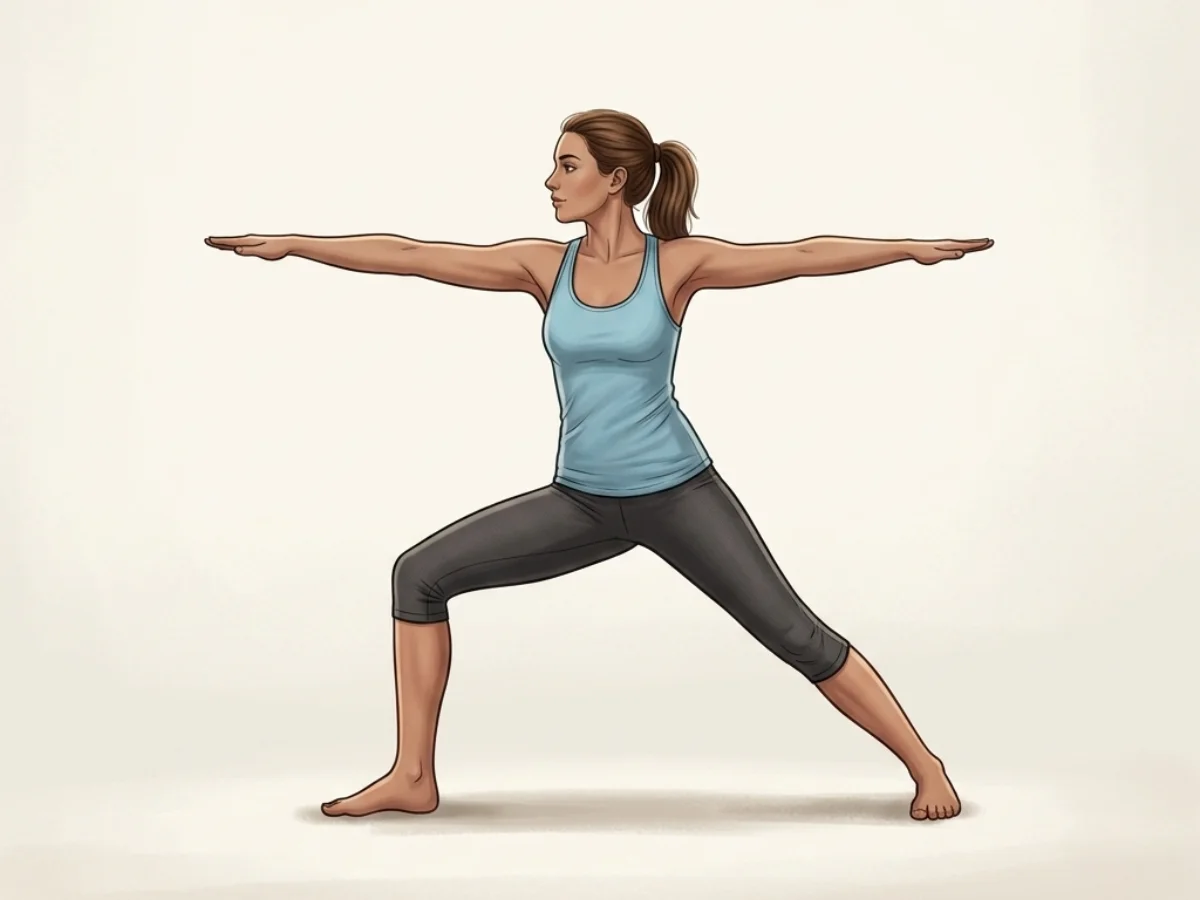
1 The Architectural Curves of the Human Vertebral Column
The healthy human spine is not a rigid, perfectly straight column; it naturally possesses four distinct physiological curves: the cervical (neck] lordosis, the thoracic (upper back] kyphosis, the lumbar (lower back] lordosis, and the sacral kyphosis. These alternating curves act as a sophisticated internal shock absorber, distributing physical impact evenly during walking, running, and jumping.
Key Details & Technique
- When we: practice yoga, our goal is never to flatten these natural curves, but rather to maintain their harmonious balance while expanding intervertebral space.
- For a: detailed look at how posture influences spinal health, explore our 4-week Yoga for Back Pain therapeutic program.
Pro Tip:
"In standing Mountain Pose (Tadasana], gently draw your lower ribs inward and lengthen your tailbone down. This balances your lumbar lordosis and engages your deep core corset."
2 Biomechanics of Spinal Flexion: Safe Forward Folds
When executing a forward fold like Paschimottanasana or Uttanasana, the primary movement must originate from tilting the pelvis forward over the thigh bones (hip flexion] rather than collapsing and rounding the lumbar spine. If your hamstrings are chronically tight, they lock the pelvis into place, forcing the vulnerable lumbar vertebrae to absorb the entire forward bending load.
Key Details & Technique
- This severe: rounding places massive anterior compression on the intervertebral discs, pushing the soft internal nucleus pulposus backward toward sensitive spinal nerves.
- Always bend: your knees liberally in forward folds to release the hamstrings and keep the spine perfectly long.
- Explore safe: folding alignment in our Standing Forward Fold (Uttanasana] guide.
3 The Art of Spinal Extension: Unlocking Upper Backbends
Backbends (spinal extension] are exceptionally exhilarating postures that stimulate the sympathetic nervous system and open the anterior chest wall. However, because the lumbar spine is naturally curved into lordosis and possesses immense mobility, beginners almost universally dump all their backbending movement directly into their lower back, creating sharp pinching and compression.
Key Details & Technique
- A healthy,: therapeutic backbend requires distributing the extension across the entire vertebral column, with particular emphasis on unlocking the notoriously rigid thoracic spine (upper back].
- Actively lift: your sternum toward the ceiling and firm your shoulder blades against your back ribs.
- Learn how: to open your upper back safely in our Cobra Pose (Bhujangasana] tutorial.
Pro Tip:
"In Wheel Pose (Urdhva Dhanurasana] or Camel Pose (Ustrasana], actively squeeze a foam block between your inner thighs. This engages your adductors and internally rotates your femurs, instantly decompressing your sacroiliac joint."
4 The Deep Core Corset: Protecting Intervertebral Discs
The absolute master key to protecting your spine during both deep flexion and extension is the active engagement of your deep abdominal stabilizers—specifically the transverse abdominis and multifidus muscles. Acting as a sophisticated biological weight belt, these muscles wrap horizontally around your lumbar spine, generating essential intra-abdominal pressure.
Key Details & Technique
- Whenever you: enter or exit a spinal movement, actively draw your navel toward your spine and engage your pelvic floor (Mula Bandha] to support your vertebral column.
- Build foundational: core stability in our 3-week Core Strength Yoga Program.
5 Axial Extension: The Secret to Balancing Your Practice
Between deep forward folds and intense backbends, always incorporate neutralizing movements featuring axial extension—actively lengthening the spine along its vertical axis. Postures like Downward-Facing Dog, High Plank, and gentle seated twists provide optimal spinal resetting, allowing intervertebral discs to rehydrate and balance internal pressure.
Key Details & Technique
- By understanding: the delicate architectural needs of your vertebral column, your yoga practice becomes an incredible source of longevity and physical freedom.
- For a: complete library of spinal movements, explore our comprehensive Yoga Poses Library.
Pro Tip:
"Never transition immediately from an extreme backbend (like Wheel Pose] directly into an extreme forward fold (like Plow Pose]. Always take 60 seconds in a neutral tabletop or Constructive Rest position to allow your spinal discs to normalize."
✨ Summary & Next Steps
Understanding the sophisticated biomechanics of your vertebral column is the ultimate gateway to lifelong physical agility, spinal decompression, and pain-free embodiment. By tilting from the pelvis in forward folds, distributing extension through the upper back in backbends, activating your deep core corset, and honoring neutral axial lengthening, you safeguard your intervertebral discs for decades to come. Step onto your mat with deep reverence for your spine today. Ready for a therapeutic, structured journey to alleviate back tension? Join our comprehensive Yoga for Back Pain series!
Frequently Asked Questions
Elena Rostova
Elena Rostova is an accredited yoga educator and anatomy specialist with over 15 years of clinical experience. She focuses on functional biomechanics and injury prevention, translating complex anatomy into accessible guidance for safe, sustainable practice.