
History & Origins of Restorative Yoga
Restorative yoga evolved from the therapeutic use of props to help injured students heal without strain.
B.K.S. Iyengar's Therapeutic Props
B.K.S. Iyengar pioneered the use of props (blocks, straps, bolsters, chairs) to help ill students experience the benefits of yoga postures safely.
Judith Lasater's "Relax and Renew"
Judith Hanson Lasater popularized these supported therapeutic concepts into the standalone style we now call Restorative yoga with her book Relax and Renew.
What Makes Restorative Unique?
Restorative is the complete opposite of a workout. It is a "work-in." Here are six rules that define the practice:
Massive Use of Props
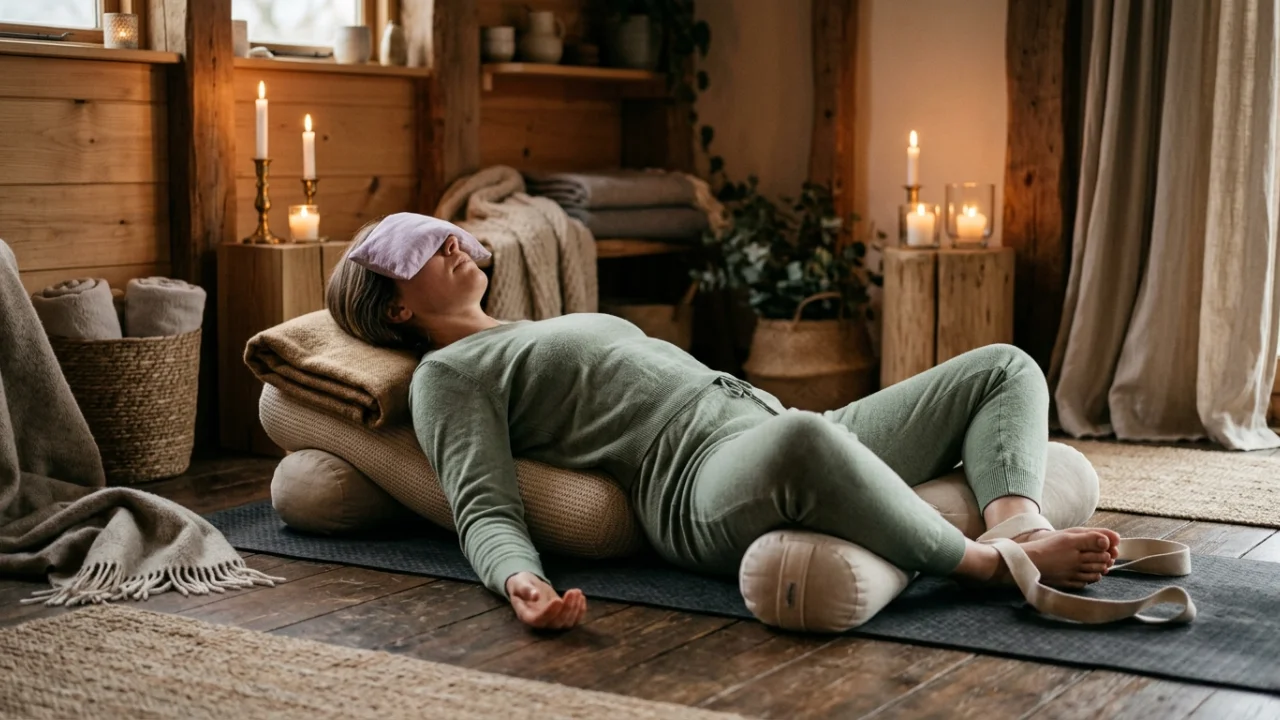
You will use bolsters, blankets, blocks, and eye pillows. Every limb should be supported so no muscle has to hold you up.
Zero Muscular Effort
If you feel a stretch, you are doing it wrong. A stretch requires tension. Restorative requires zero tension.
Poses Held for 5-20 Minutes
It takes the nervous system roughly 15 minutes to fully power down into the parasympathetic state, requiring very long holds.
Sensory Deprivation
Eye pillows block out light, blankets provide heavy warmth, and rooms are kept silent to reduce external stimuli to the brain.
Only 4-6 Poses Per Class
Because of the long hold times and the meticulous setup required for the props, you will do very few poses in an hour.
Focus on Down-Regulation
The primary goal is not physical flexibility, but treating chronic stress, burnout, and adrenal fatigue.
Restorative vs. Yin
| Feature | Restorative Yoga | Yin Yoga |
|---|---|---|
| Primary Goal | Heal the nervous system | Stretch the deep fascia |
| Physical Sensation | 100% comfort; zero stretch | Dull ache; moderate stress |
| Use of Props | Heavy (to support the body) | Moderate (to find the edge) |
| Mindset | Active relaxation / drifting | Observing physical discomfort |
10 Fundamental Restorative Poses
Every pose uses extensive props. If you feel any strain or stretch, you must add more blankets or bolsters until you are 100% comfortable.
Supported Child's Pose
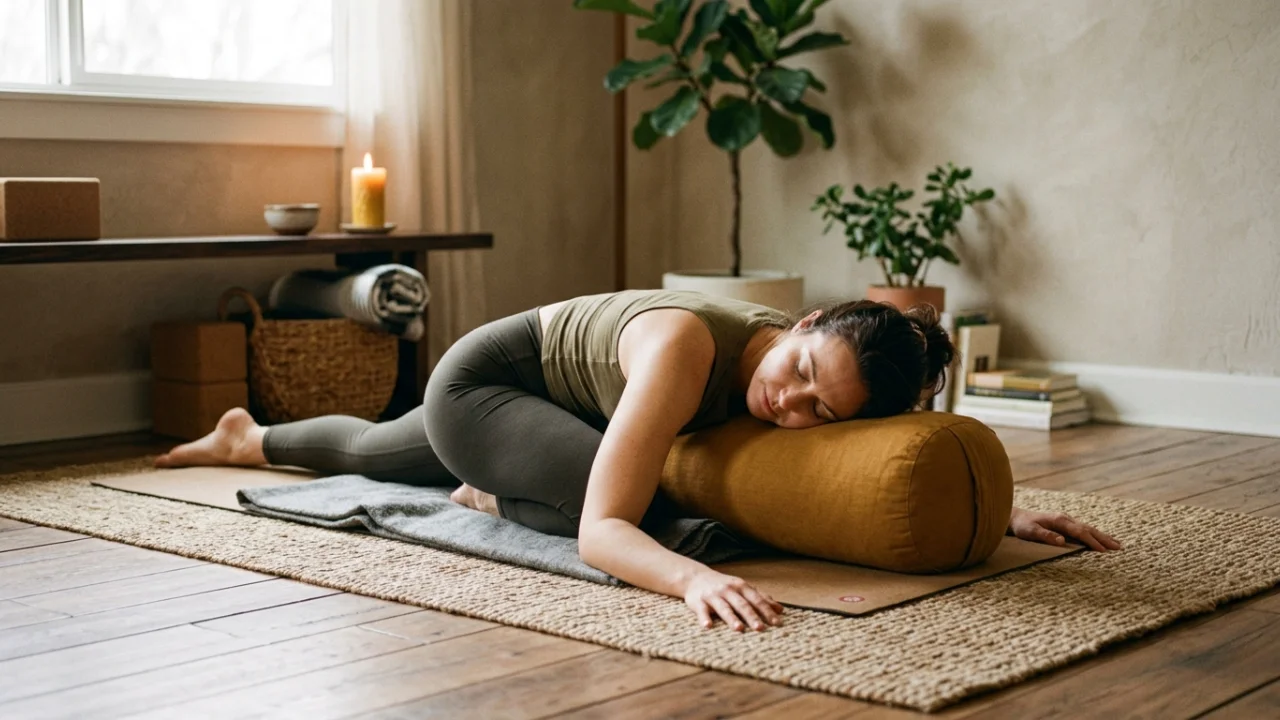
Salamba BalasanaStraddling a bolster and resting the torso on it. Deeply comforting and relieves lower back tension.
Supported Bridge
Salamba Setu BandhasanaA block or bolster placed under the sacrum. Reverses blood flow to the pelvis and relieves lumbar fatigue.
Supported Fish
Salamba MatsyasanaLying back over a bolster placed along the spine to passively open the chest and lungs.
Constructive Rest
Savasana VariationLying on the back with knees bent and resting against each other. Releases the psoas muscle entirely.
Supported Twist
Salamba BharadvajasanaLying face down sideways over a bolster. Massages digestive organs and gently wrings out spinal tension.
Supported Bound Angle
Supta Baddha KonasanaLying on a bolstered incline with knees open, heavily supported by blocks. Opens the heart and pelvis.
Surfboard Pose
Advasana VariationLying face down on a long bolster so the belly hangs free. Excellent for digestive distress.
Supported Fold
Salamba PaschimottanasanaSeated fold with a mountain of bolsters on the legs to rest the forehead on. Calms the mind.
Supported Savasana
SavasanaThe deepest rest. Bolster under knees, blanket under head, blanket over body, and eye pillow on eyes.
A Deep Rest Sequence (60 Minutes)
Take 1-2 minutes to meticulously set up your props for each pose. If you feel any pulling or stretching, add a blanket. Set a soft timer for each hold.
| # | Pose Name | Duration | Key Instruction |
|---|---|---|---|
| 1 | Constructive Rest Savasana Variation | 5 Min | Lie on back, knees bent, feet wide, knees knocking together. Let the lower back sink. |
| 2 | Supported Bound Angle Supta Baddha Konasana | 8 Min | Lie back on an inclined bolster. Soles of feet together, blocks firmly under both knees. |
| 3 | Supported Fish Salamba Matsyasana | 5 Min | Lie back over a flat bolster under the ribcage, shoulders touching the mat. Opens breathing. |
| 4 | Supported Twist (Right) Salamba Bharadvajasana | 5 Min | Right hip against bolster, twist torso, and lay chest and head face-down onto the bolster. |
| 5 | Supported Twist (Left) Salamba Bharadvajasana | 5 Min | Left hip against bolster, twist torso, and lay chest and head face-down onto the bolster. |
| 6 | Supported Child's Pose Salamba Balasana | 8 Min | Knees wide, bolster between legs. Lay torso and head completely onto the bolster. |
| 7 | Supported Bridge Salamba Setu Bandhasana | 5 Min | Slide a block (on its lowest height) or a rolled blanket under your sacrum/pelvis. |
| 8 | Surfboard (Right Cheek) Advasana Variation | 4 Min | Lie belly-down on a long bolster, right cheek resting. Arms draped over the sides. |
| 9 | Surfboard (Left Cheek) Advasana Variation | 4 Min | Turn head to rest on the left cheek to balance the cervical spine. |
| 10 | Supported Savasana Savasana | 10 Min | Bolster under knees, eye pillow on, blanket covering the body. Complete surrender. |
| 11 | Integration Sukhasana | 1 Min | Roll slowly to the right side, gently press up to a seat, and take 5 deep breaths. |
Benefits of Restorative
Improves Sleep
The deep relaxation helps calm an overactive mind, making it much easier to fall asleep at night.
Lowers Blood Pressure
Completely resting your body naturally slows your heart rate and helps lower your blood pressure.
Boosts Immunity
True rest gives your body the time and energy it needs to heal and fight off illness.
Relieves Exhaustion
It offers a total break from the stress of daily life, helping you recover from burnout.
Melts Away Tension
Using props allows your muscles to completely let go of tension you didn't even know you were holding.
Aids Digestion
Deep relaxation shifts your body into a healing state that naturally improves digestion.
Provides Mental Peace
It offers a safe, quiet space to simply breathe and let go of anxiety and worry.
Medical Disclaimer: Restorative yoga is generally safe for everyone, but those with severe clinical depression may find the intense silence and lack of movement challenging.
Who is Restorative Yoga For?
Those with Burnout or Insomnia
If you are chronically stressed, suffering from adrenal fatigue, or cannot sleep, this practice resets your nervous system back to baseline.
Injury & Illness Recovery
The complete lack of strain makes this the only suitable yoga style for those recovering from severe illness, surgery, or major physical trauma.
Beginner Mistakes Unique to Restorative
Skimping on props
Thinking "I don't need a block under that knee" defeats the purpose. If the knee hangs in the air, the hip muscle has to contract to hold it. Use ALL the props to achieve zero gravity.
Feeling guilty for resting
High-achievers often lay there feeling guilty that they aren't "working out." Reframe the practice: resting deeply IS the vital work your body desperately needs to heal.
Fighting the stillness
Your body will twitch, and your mind will race at first. This is the nervous system detoxing. Don't fight it; just observe the chaos until the body eventually powers down.
Letting the mind race unchecked
While the body is still, the mind might plan tomorrow's grocery list. Use a gentle anchor, like focusing on the warmth of the blanket or the soft rise and fall of your belly.
Frequently Asked Questions
Will I fall asleep in a Restorative class?
How is Restorative different from Yin yoga?
What should I wear to a Restorative class?
Is Restorative yoga good for pregnancy?
Can I do Restorative yoga in my bed?
Why do we hold poses for 20 minutes?
Explore Other Yoga Styles
Yin Yoga
A floor-based practice that stretches the deep connective tissues through 3-5 minute holds.
Explore Guide →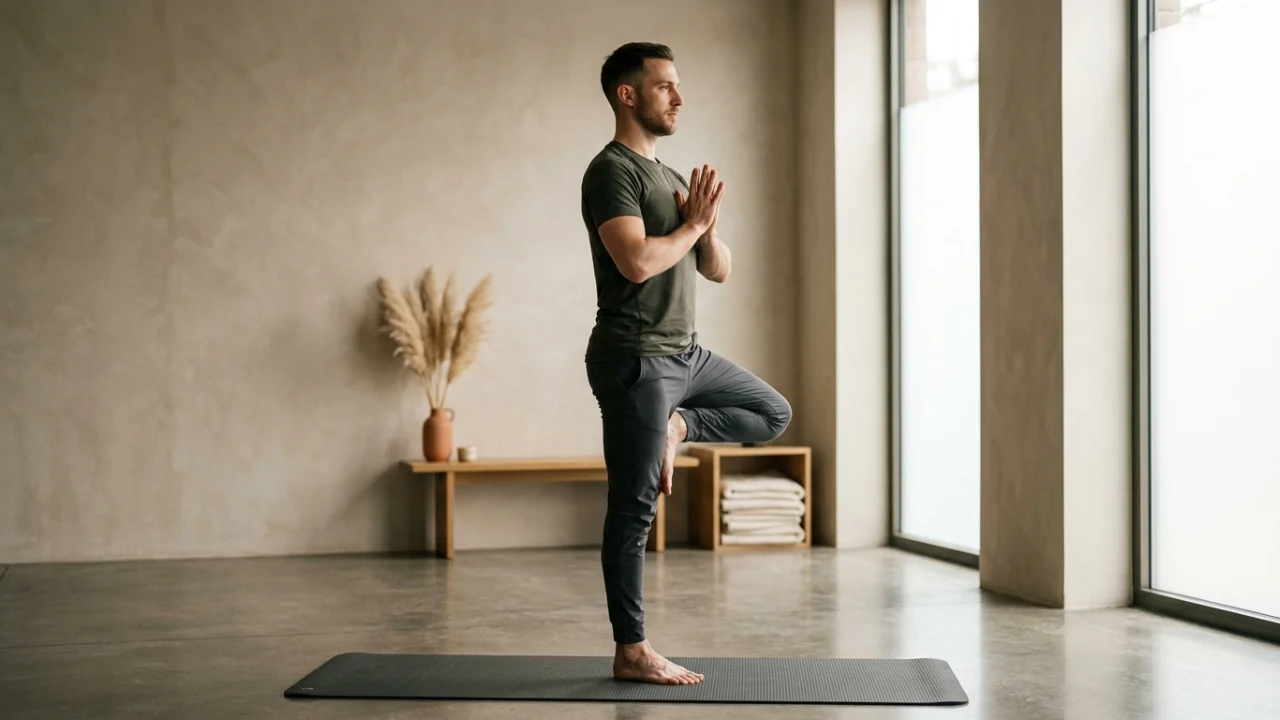
Hatha Yoga
A slow-paced, foundational practice focused on physical alignment and breath control.
Explore Guide →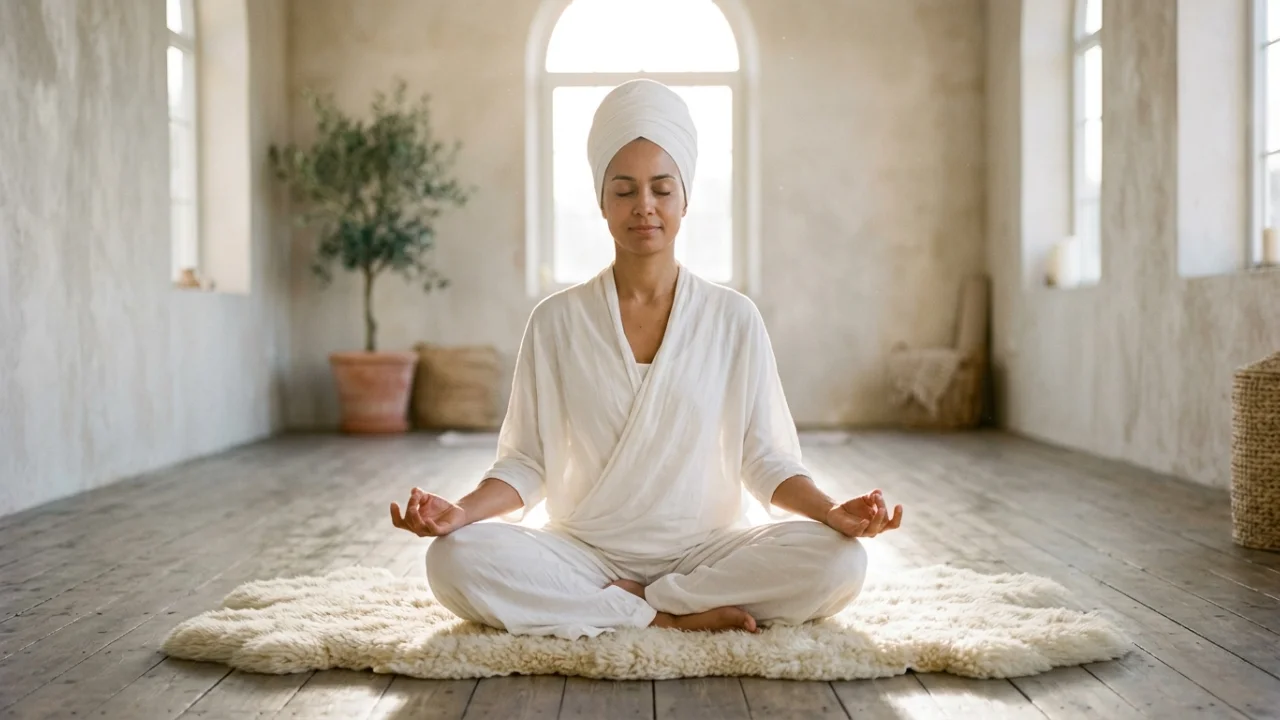
Kundalini Yoga
An uplifting blend of spiritual and physical practices incorporating movement, dynamic breathing techniques, meditation, and chanting.
Explore Guide →