
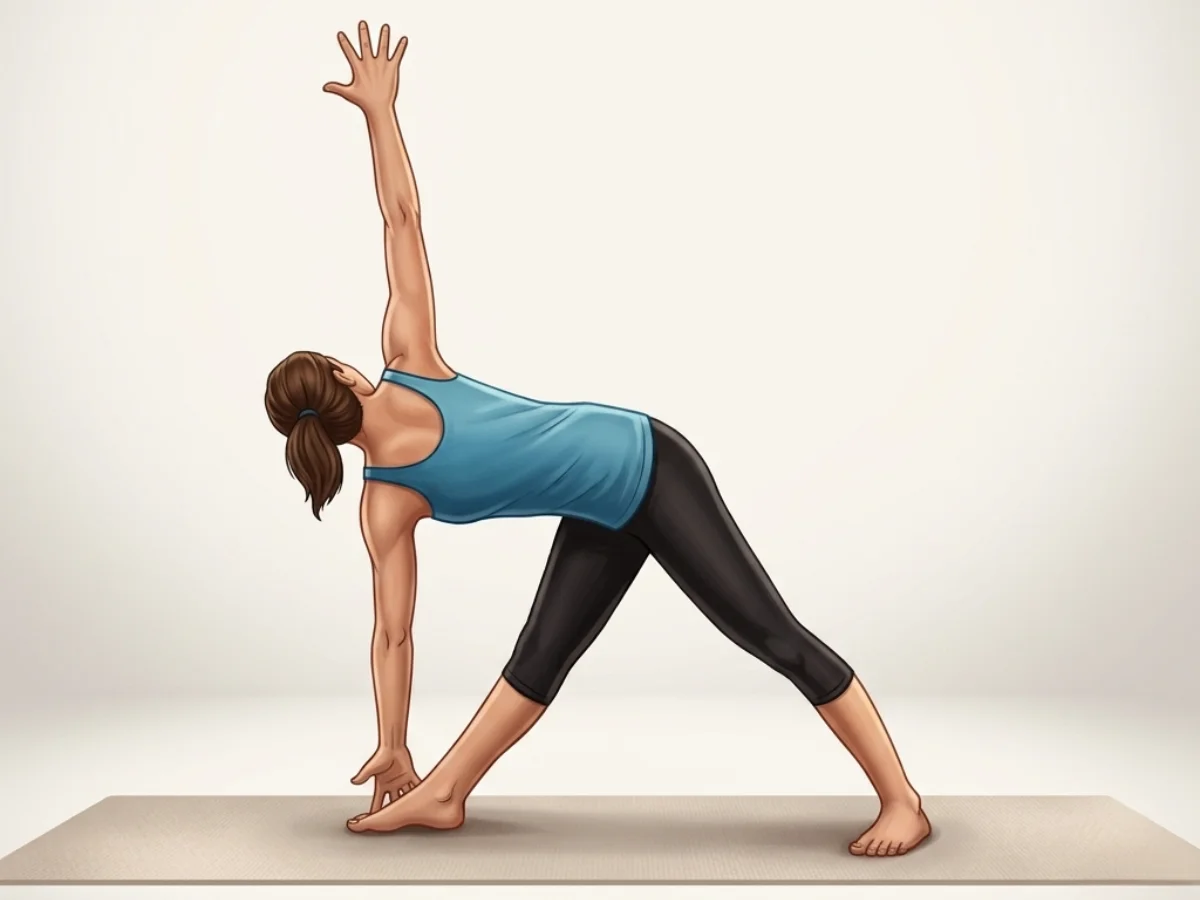
Revolved Triangle Pose
Parivrtta Trikonasana
By Elena Rostova Updated: verified Medically Reviewed
Revolved Triangle Pose (Parivrtta Trikonasana) is an intense standing twist that challenges balance, flexibility, and focus. By anchoring a strong, straight-legged base and rotating the torso, it provides a deep stretch to the hamstrings and outer hips while massaging the abdominal organs.
Hold Time
30–60 sec · 5–10 breaths
Pronunciation
pah-ree-VRIT-tah tree-koh-NAH-sah-nah
About Revolved Triangle Pose
Commonly practiced as Revolved Triangle Pose (Parivrtta Trikonasana), this dynamic posture is beautifully designed to help unlock tension. As you settle into the shape, it gently works the twisting & balance to increase your overall flexibility. Practicing this pose regularly helps with stretches it band and hips and leaves you feeling completely refreshed.
How to Practice
Start in Mountain Pose
Begin standing at the top of your mat in Mountain Pose (Tadasana), facing forward with your feet together and hands by your sides.
Step Back
Step your left foot back about 3 to 4 feet. Turn your left toes out slightly, to about a 45-degree angle. Keep your right toes pointing straight forward to the top of the mat.
Square the Hips
Draw your right hip back and press your left hip forward so that your pelvis squares as much as possible toward the front edge of the mat.
Extend and Hinge
Inhale and reach your left arm up toward the ceiling. Exhale, hinge forward from your hips, keeping your spine long, and lower your torso until it is parallel to the floor.
Place the Hand
Place your left hand on a block or the floor on either the inside or outside of your right foot. If reaching the floor rounds your spine, use a block.
Rotate the Torso
Inhale to lengthen your spine from tailbone to crown. Exhale to actively twist your torso to the right, opening your chest toward the side wall.
Reach Up
Extend your right arm straight up toward the ceiling, aligning it with your left arm. Keep your shoulders drawn away from your ears.
Gaze
Turn your head to look up at your right thumb, or keep your gaze neutral or down at your front foot if your neck feels strained.
Hold and Breathe
Hold for 5 to 10 steady breaths. With each inhale, focus on lengthening the spine; with each exhale, gently deepen the twist.
Release and Switch
To exit, inhale and untwist, bringing your torso upright and lifting your arms. Step forward to Mountain Pose and repeat on the other side.
Practice with the Yoga Timer
Keep track of your hold time and breath count for this pose.
Beginner Modifications & Prop Options
Yoga is a personal journey. These modifications and prop options allow you to adapt the pose to your current level of balance and flexibility, ensuring a safe and supportive practice.
Use a Block Under the Bottom Hand
Place a yoga block inside or outside your front foot to rest your bottom hand on. This extra height keeps the spine straight and chest open without strain.
Tip: Focus on alignment rather than depth.
Hand on Hip
Keep your hand on your top hip or sacrum instead of reaching up. This helps focus entirely on the twist in the spine rather than shoulder mobility.
Tip: Focus on alignment rather than depth.
Widen the Stance Horizontally
Step your back foot slightly out to the side so your feet are hip-width apart horizontally to create a wider base and make balancing much easier.
Tip: Focus on alignment rather than depth.
Benefits of Revolved Triangle Pose
Stretches IT Band and Hips
Provides an intense stretch to the outer hips, glutes, and the iliotibial (IT) band along the outside of the thigh.
Improves Spinal Mobility
The deep rotation of the thoracic spine improves overall back flexibility and relieves tension between the shoulder blades.
Stimulates Digestion
The twisting motion acts as a massage for the internal abdominal organs, which can aid digestion and detoxification.
Enhances Balance and Focus
Combining a twisted torso with a relatively narrow base of support challenges proprioception and sharpens mental focus.
Strengthens Legs and Core
Requires strong engagement from the quadriceps, hamstrings, and core obliques to maintain stability and form.
Common Mistakes to Avoid
Mistake: Rounding the Back
How to fix: Use a block under your hand. Focus on creating a straight line from your tailbone to the crown of your head before twisting.
Mistake: Hips Misaligned
How to fix: Actively draw the front hip crease back and press the back hip forward to keep the pelvis level and square.
Mistake: Locking the Front Knee
How to fix: Keep a micro-bend in the front knee and actively engage the quadriceps.
Safety and Precautions
Sacroiliac (SI) Joint Issues
The asymmetrical twist can exacerbate SI joint pain or dysfunction.
Back Injuries
Those with herniated discs or acute back pain should avoid deep spinal twists.
Pregnancy
Deep twists compress the abdomen; pregnant practitioners should modify with an open twist or skip the pose.
Low Blood Pressure
The combination of folding and twisting can cause dizziness upon rising.
Medical Disclaimer: If you have any of the above conditions, consult your doctor or a qualified yoga instructor before attempting this pose.
Muscles Worked in Revolved Triangle Pose
Revolved Triangle Pose demands synchronized muscular effort, creating a profound sense of engagement and release throughout the body. The activation of the primary muscles supports the structure, while the secondary muscles provide stability and balance.
Primary Muscles
External/Internal Obliques
Actively engage to rotate the torso and hold the twist.
Hamstrings
Stretch deeply in the front leg.
Gluteus Medius / IT Band
Stretch intensely on the side of the front leg while stabilizing the hips.
Secondary Muscles
Erector Spinae
Engages to keep the spine long and straight during the fold.
Quadriceps
Engage to stabilize the legs and protect the knee joints.
Rhomboids
Draw the shoulder blades together to open the chest.
Poses to Practice Before and After Revolved Triangle Pose
Prepare with these Poses
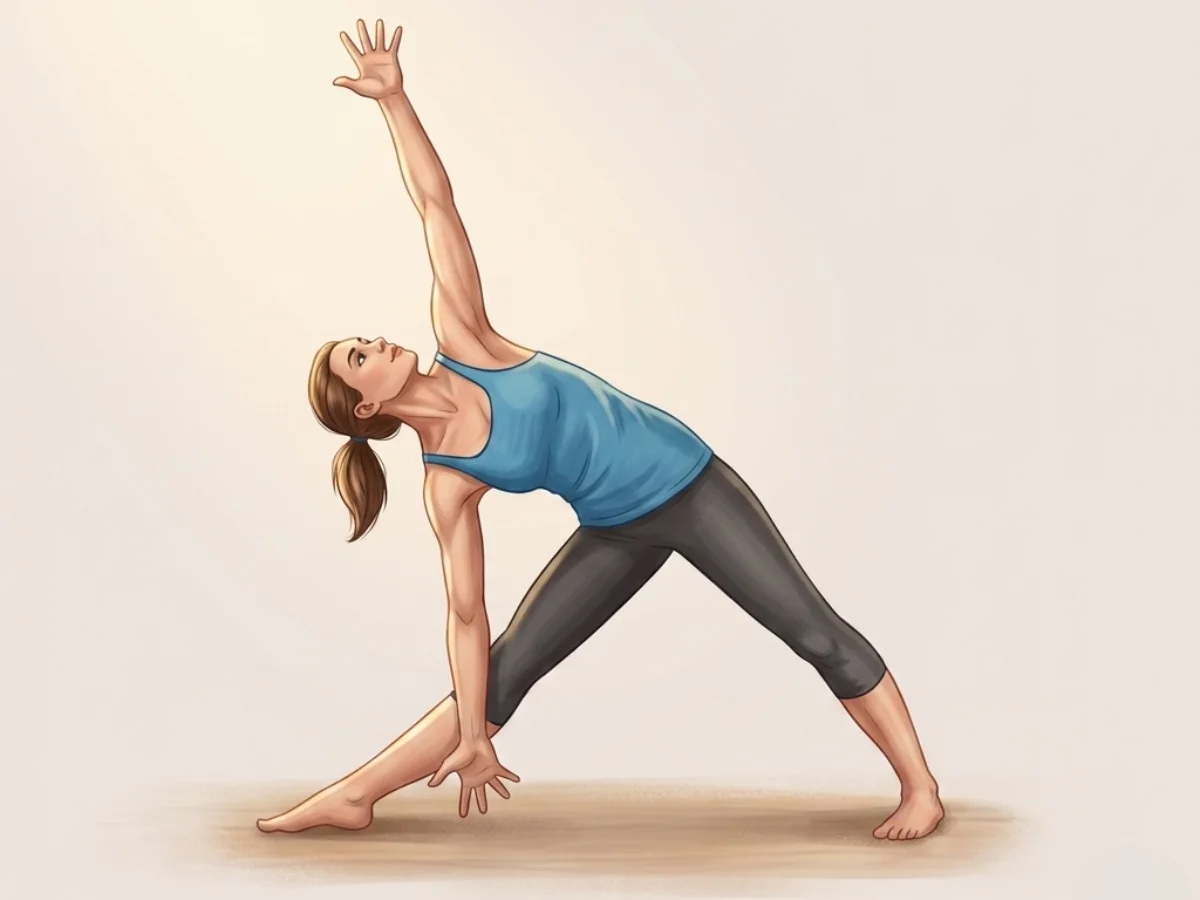
Triangle Pose
TrikonasanaEstablishes the foundation of keeping both legs straight while folding laterally.
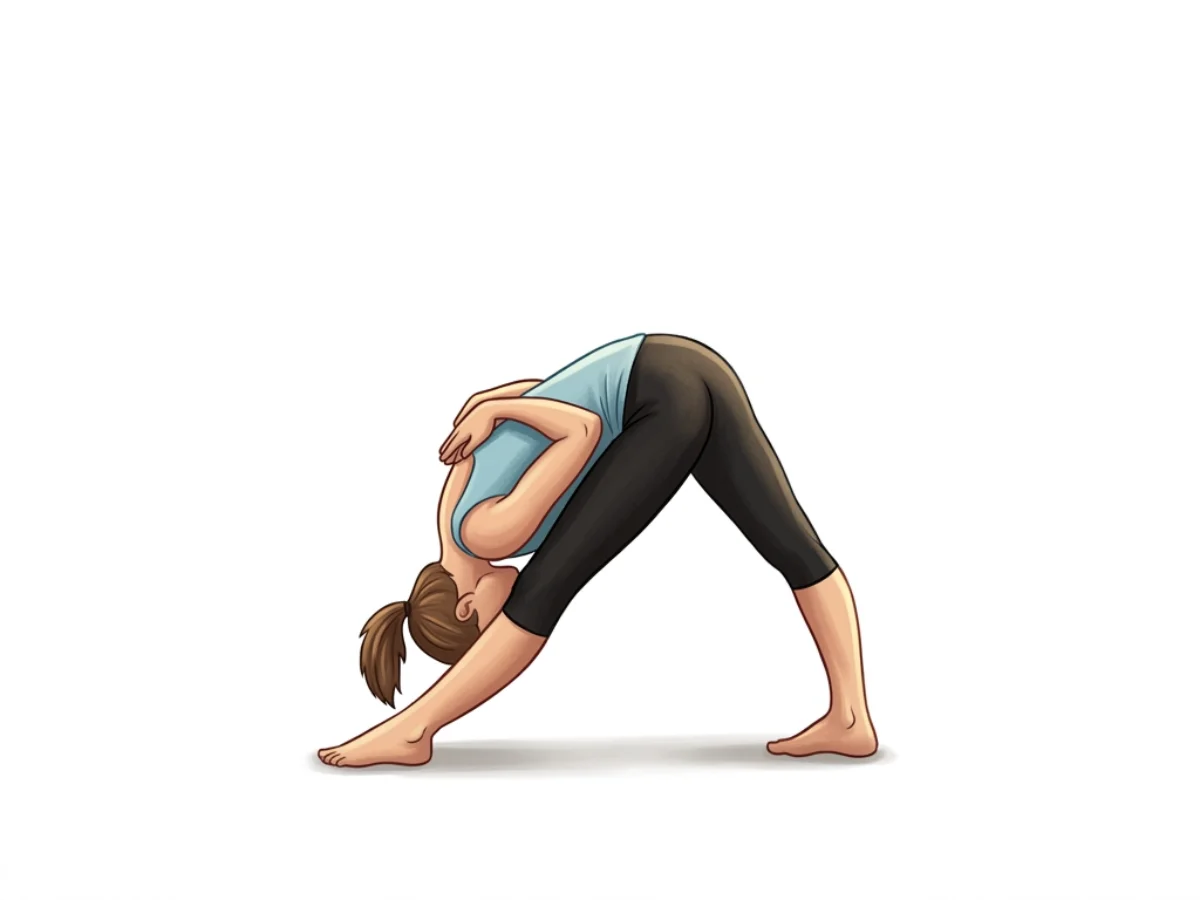
Pyramid Pose
ParsvottanasanaPrepares the hamstrings and hips for the deep forward fold required before the twist.
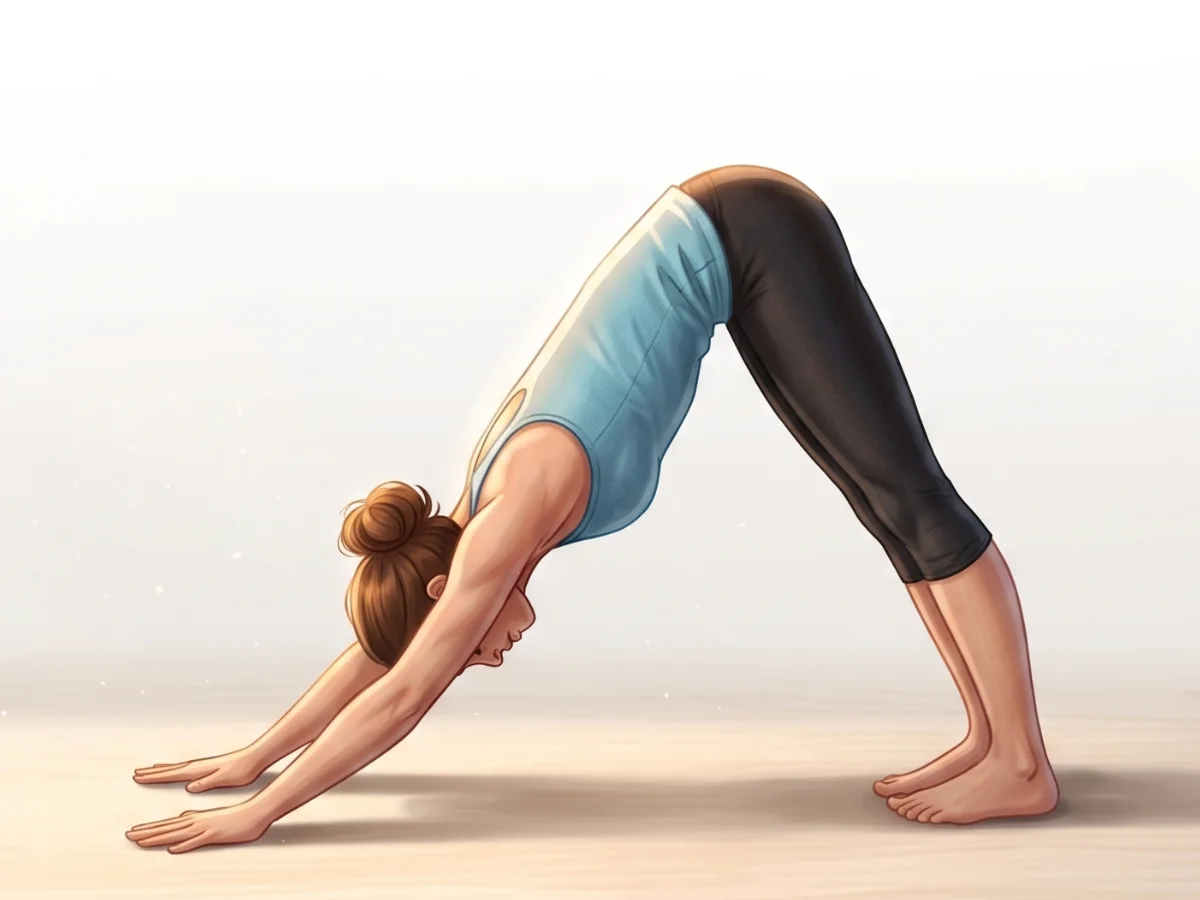
Downward-Facing Dog
Adho Mukha SvanasanaStretches the hamstrings and calves, warming up the legs for standing poses.
Follow with neutralizing Counter-poses
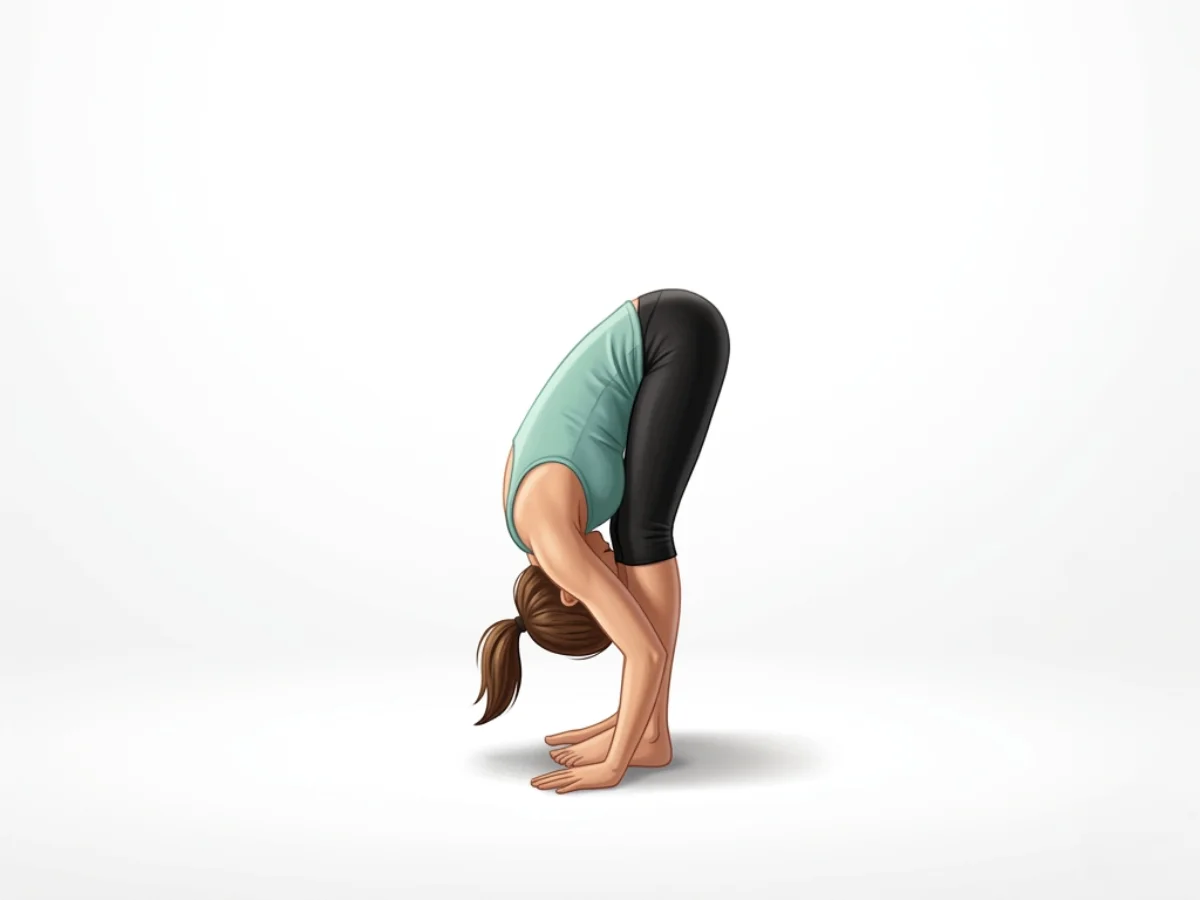
Standing Forward Bend
UttanasanaSymmetrically releases the spine and hamstrings after the deep twist.
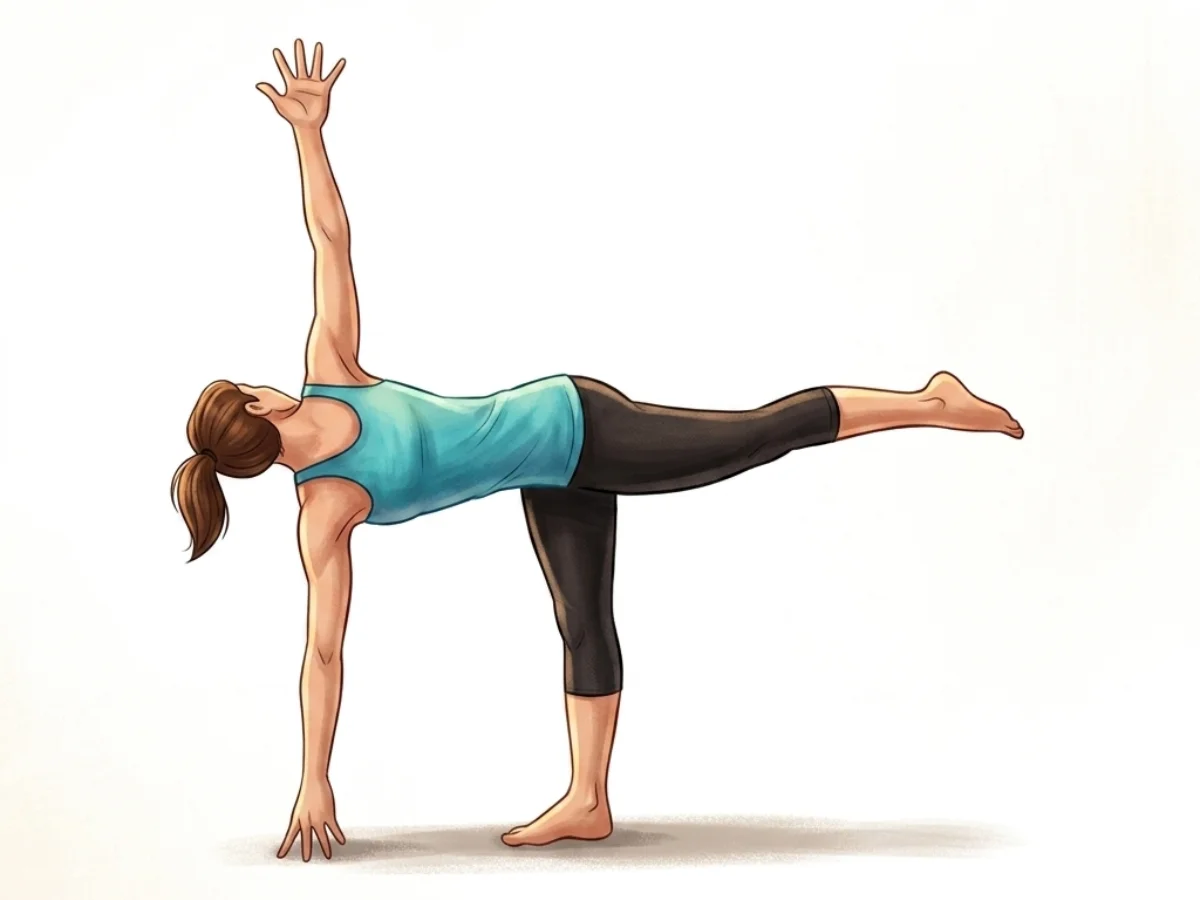
Revolved Half Moon
Parivrtta Ardha ChandrasanaA challenging balancing transition that continues the twisting motion.
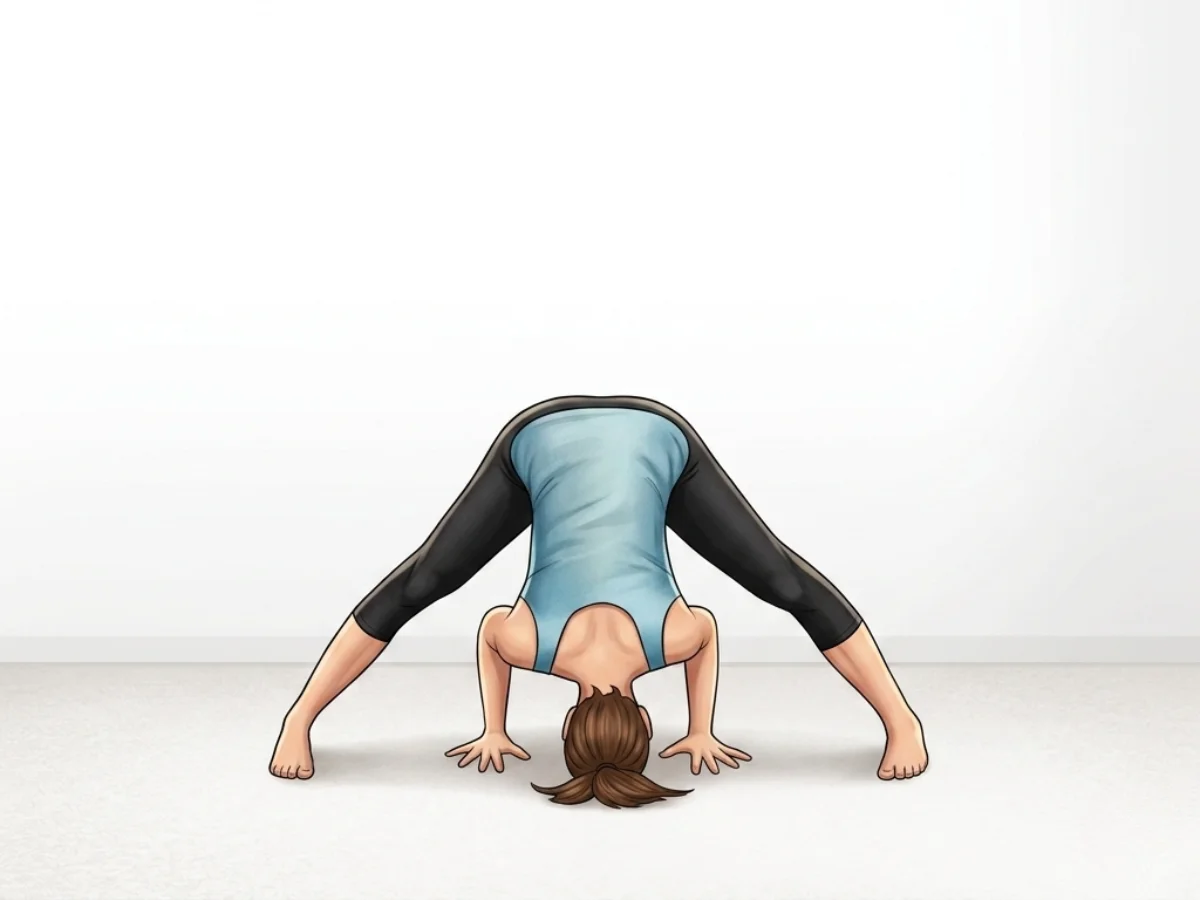
Wide-Legged Forward Fold
Prasarita PadottanasanaReleases the hips and back with a wide, symmetrical stance.
Frequently Asked Questions
Where should I place my bottom hand?
Placing the hand on the inside of the front foot is easier for balance and requires less flexibility. Placing it on the outside of the foot deepens the twist.
Why is it so hard to balance in this pose?
Balancing is difficult because your feet are essentially on a tightrope (heel-to-heel alignment) while your upper body is rotating. To fix this, widen your stance so your feet are hip-width apart, giving you a broader base of support.
Should both my legs be completely straight?
Yes, the goal is to have both legs straight, but you must avoid locking or hyperextending your knees. Always keep a slight, active micro-bend in the joints to protect them.

Elena Rostova is an accredited yoga educator and anatomy specialist with over 15 years of clinical experience. She focuses on functional biomechanics and injury prevention, translating complex anatomy into accessible guidance for safe, sustainable practice.
Read Full ProfileContinue Your Yoga Journey
Ready to deepen your practice? Explore our extensive library of poses, or join a structured program designed to build strength, flexibility, and mindfulness.