
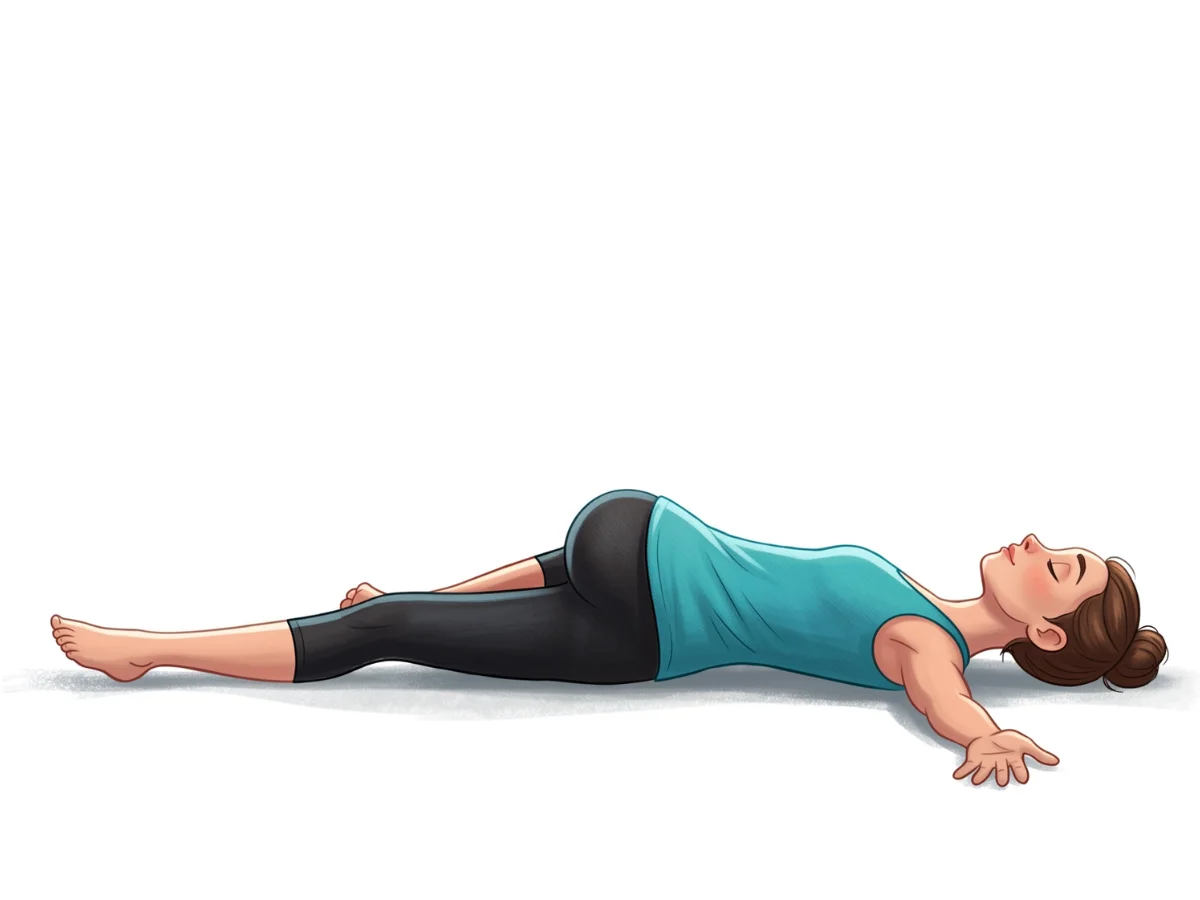
Supine Spinal Twist
Supta Matsyendrasana
By Elena Rostova Updated: verified Medically Reviewed
Supine Spinal Twist (Supta Matsyendrasana) is a restorative reclined posture that elongates and rotates the spine, helping to release deep tension in the back muscles. Often practiced at the end of a sequence, it balances the nervous system and massages the abdominal organs.
Hold Time
1–3 min per side · 10–30 breaths
Pronunciation
SOOP-tah maht-syen-DRAHS-anna
About Supine Spinal Twist
A vital part of many yoga sequences, Supine Spinal Twist (Supta Matsyendrasana) offers wonderful benefits that go beyond its simple shape. By gently focusing on spinal mobility & relaxation, it actively stretches your muscles and builds heat. Practicing this pose regularly helps with relieves lower back tension and leaves you feeling completely refreshed.
How to Practice
Start Supine
Lie comfortably on your back, bringing your knees into your chest to gently lengthen your lower back along the floor.
Open the Arms
Extend both arms out to the sides in a "T" shape, in line with your shoulders, palms facing down for stability or up for receptivity.
Drop Knees to the Side
On an exhalation, gently drop both knees over to the right side of your body, resting them on the floor or a prop.
Ground the Shoulders
Focus on keeping your left shoulder blade firmly pinned to the mat. It is more important to ground the shoulder than to have the knees touch the floor.
Adjust the Gaze
If it feels comfortable for your neck, gently turn your head to look over your left fingertips, completing the twist through the cervical spine.
Hold and Breathe
Rest in the twist for 1 to 3 minutes. Breathe deeply into the left side of your ribcage, allowing gravity to deepen the stretch on every exhale.
Return to Center
Inhale deeply and engage your core slightly as you lift your knees back to the center of your chest.
Switch Sides
Repeat the posture on the left side, dropping the knees to the left and gazing to the right, to maintain balance in the body.
Practice with the Yoga Timer
Keep track of your hold time and breath count for this pose.
Beginner Modifications & Prop Options
Yoga is a personal journey. These modifications and prop options allow you to adapt the pose to your current level of balance and flexibility, ensuring a safe and supportive practice.
Prop Under Knees
Place a bolster or block under your knees or between your thighs. This provides support so the muscles can fully relax without strain.
Tip: Focus on alignment rather than depth.
Single Leg Twist
Keep the bottom leg extended straight on the mat and only cross the top knee over the body for a milder, more isolated stretch.
Tip: Focus on alignment rather than depth.
Cactus Arms
Bend your elbows to 90 degrees (cactus arms) instead of extending them straight out. This provides a deeper stretch for the pectorals.
Tip: Focus on alignment rather than depth.
Benefits of Supine Spinal Twist
Relieves Lower Back Tension
Provides a gentle, decompressive rotation for the lumbar spine, effectively releasing stiffness and tight muscles in the lower back.
Stretches the Glutes & Outer Hips
The cross-body position deeply stretches the gluteus medius and IT band area on the side of the top leg.
Improves Spinal Mobility
Encourages healthy rotation and hydration of the intervertebral discs along the entire length of the spine.
Massages Digestive Organs
The wringing action compresses the abdominal cavity, stimulating the liver, kidneys, and digestive tract to aid in detoxification.
Calms the Nervous System
As a restorative floor posture, it shifts the nervous system into a parasympathetic (rest and digest) state, reducing anxiety and stress.
Common Mistakes to Avoid
Mistake: Lifting the Opposite Shoulder
How to fix: Prioritize keeping both shoulder blades flat on the mat. Let the knees hover or use a prop if grounding them lifts your shoulder.
Mistake: Forcing the Neck
How to fix: Do not force your head to turn if you feel a pinch. Keep your gaze straight up toward the ceiling if turning the neck is uncomfortable.
Mistake: Clenching the Core
How to fix: Consciously relax your abdominal muscles once you are in the twist to allow the organs and deep muscles to release.
Safety and Precautions
Recent Spinal Surgery or Severe Disc Injuries
Spinal rotation can aggravate acute herniations or healing vertebral tissues.
Sacroiliac (SI) Joint Instability
Deep asymmetrical twists can destabilize the SI joint. Keep the twist very mild or avoid it entirely.
Late-Stage Pregnancy
Deep closed twists compress the abdomen. Pregnant practitioners should opt for open twists or modify significantly.
Medical Disclaimer: If you have any of the above conditions, consult your doctor or a qualified yoga instructor before attempting this pose.
Muscles Worked in Supine Spinal Twist
Supine Spinal Twist demands synchronized muscular effort, creating a profound sense of engagement and release throughout the body. The activation of the primary muscles supports the structure, while the secondary muscles provide stability and balance.
Primary Muscles
Erector Spinae
Passively stretches along the rotational axis of the spine.
Gluteus Medius
Lengthens deeply on the outer hip of the top leg.
Obliques
Stretch dynamically across the side of the abdomen.
Secondary Muscles
Pectoralis Major
Opens and stretches as the opposite arm anchors to the floor.
Quadratus Lumborum (QL)
Releases tension in the deep lower back area.
Poses to Practice Before and After Supine Spinal Twist
Prepare with these Poses
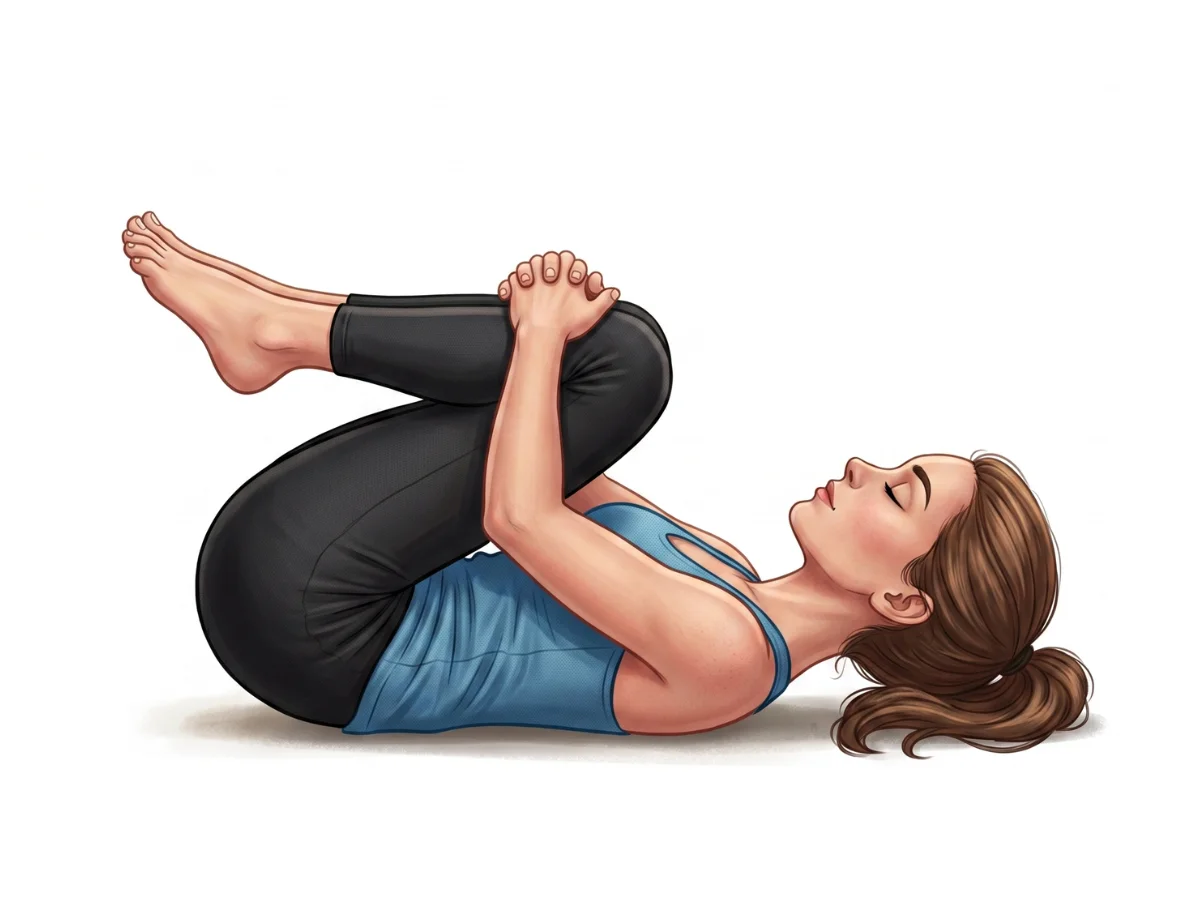
Wind Removing Pose
PavanamuktasanaPrepares the lower back for rotation by providing a gentle initial stretch.
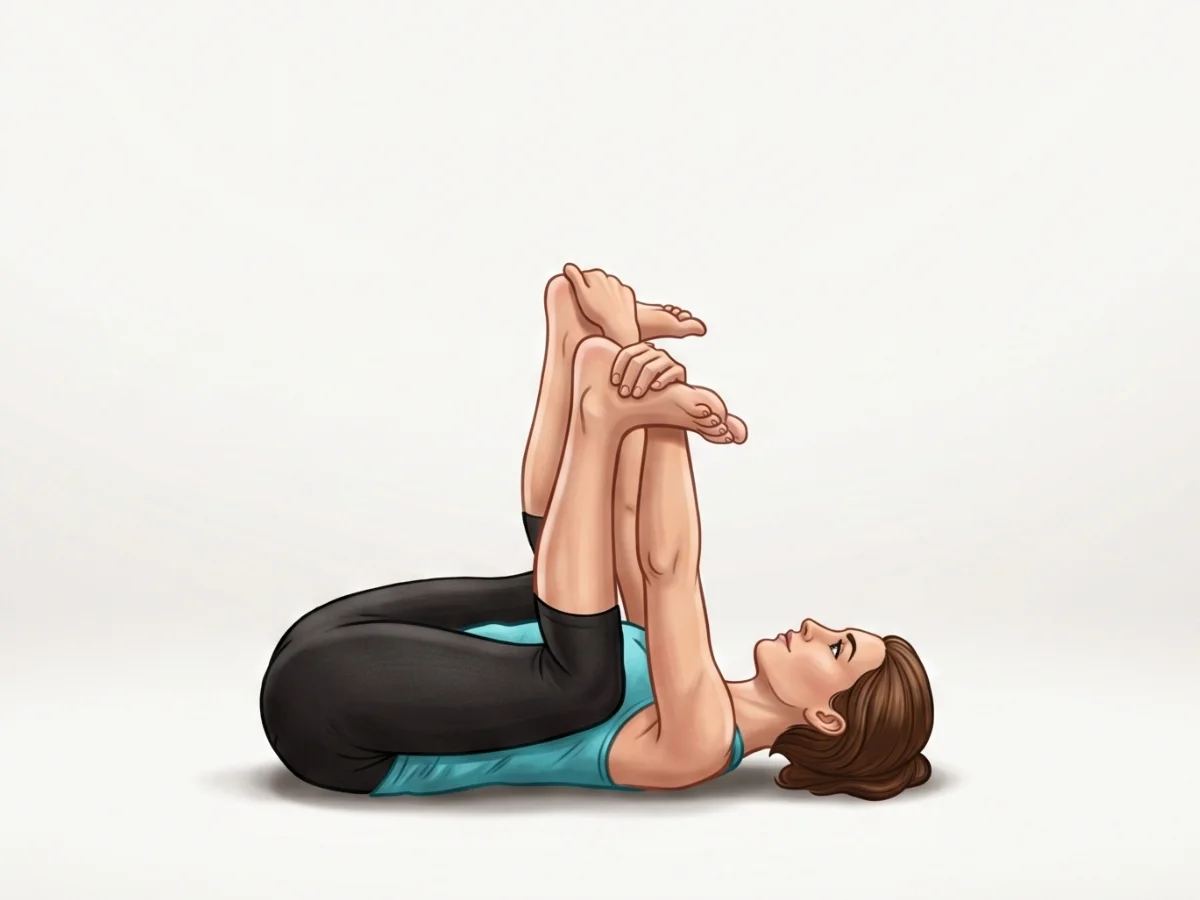
Happy Baby Pose
Ananda BalasanaOpens the hips and relaxes the sacrum prior to twisting.
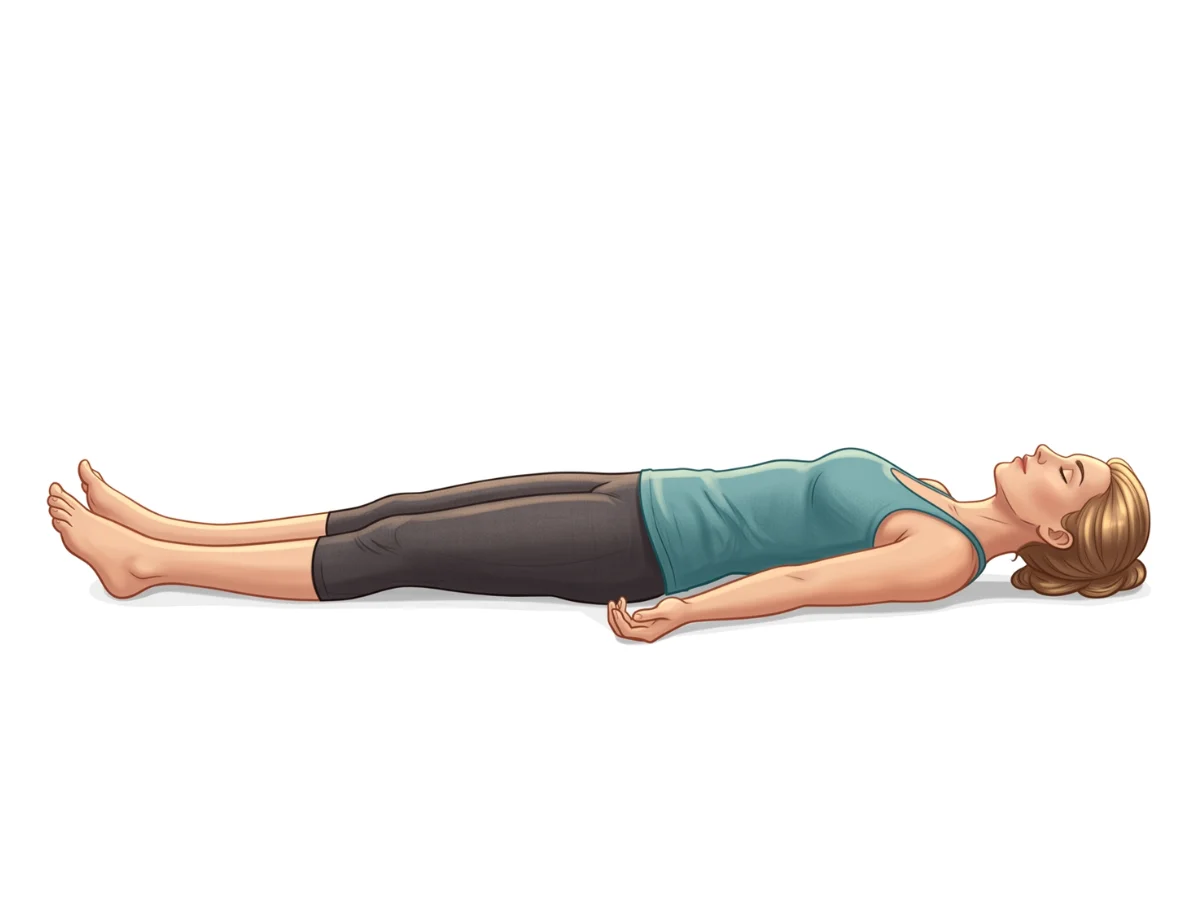
Corpse Pose
SavasanaCenters the mind and grounds the body before moving into the twist.
Follow with neutralizing Counter-poses
Corpse Pose
SavasanaAllows the spine to neutralize and the nervous system to fully integrate.
Happy Baby Pose
Ananda BalasanaSymmetrically releases the lower back after asymmetrical rotation.
Wind Removing Pose
PavanamuktasanaGently decompresses the lumbar spine post-twist.
Frequently Asked Questions
Is it normal if my knees don’t touch the floor?
Absolutely. Keeping your opposite shoulder anchored to the floor is more important for a safe spinal twist. Let your knees hover or place a prop underneath them.
How can I make the twist deeper?
To deepen the stretch, you can cross your top leg tightly over the bottom leg (like Eagle Pose legs) before dropping them to the side.
When is the best time to do this pose?
Supine Spinal Twist is highly effective at the end of a practice to neutralize the spine after backbends and forward folds, right before Savasana.

Elena Rostova is an accredited yoga educator and anatomy specialist with over 15 years of clinical experience. She focuses on functional biomechanics and injury prevention, translating complex anatomy into accessible guidance for safe, sustainable practice.
Read Full ProfileContinue Your Yoga Journey
Ready to deepen your practice? Explore our extensive library of poses, or join a structured program designed to build strength, flexibility, and mindfulness.