
Sleeping Yogi
Yoganidrasana
By Elena Rostova Updated: verified Medically Reviewed
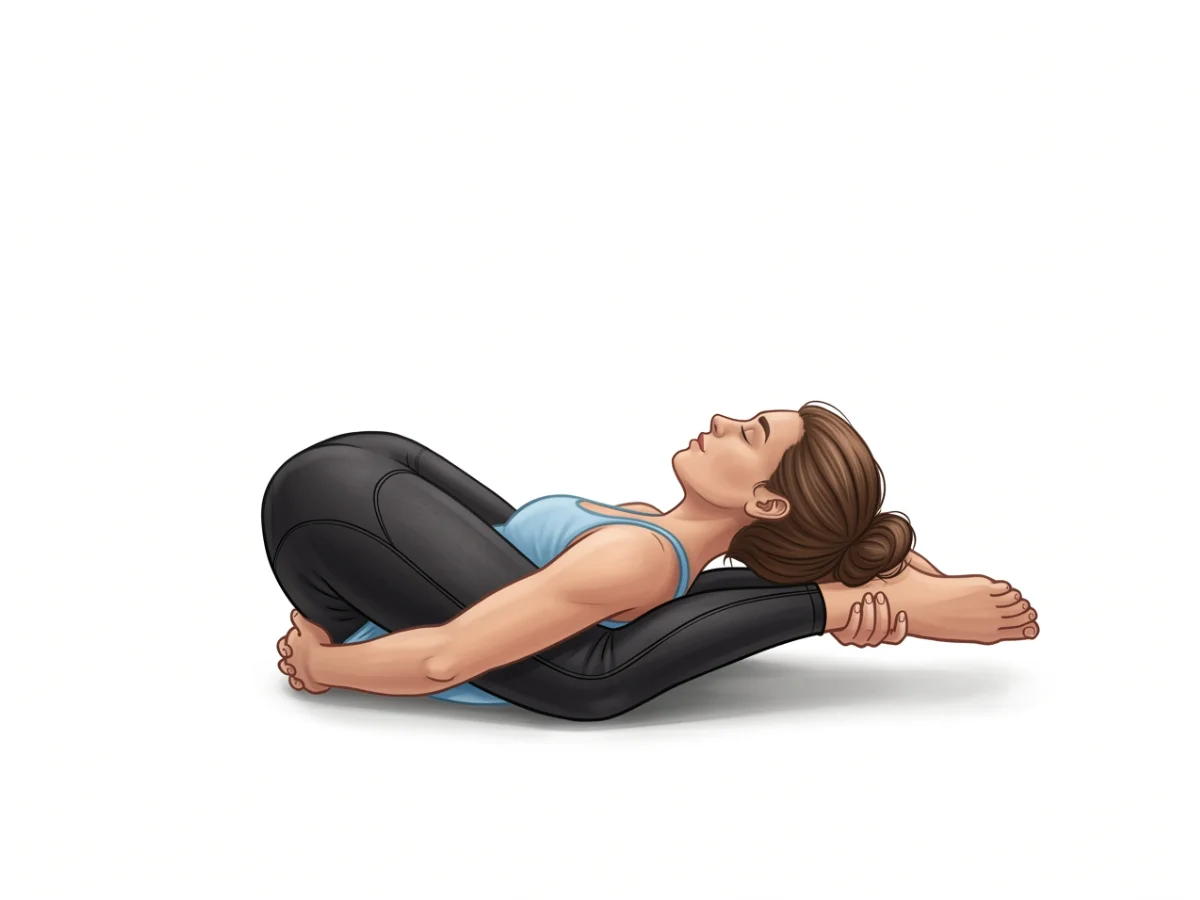
Sleeping Yogi Pose (Yoganidrasana) is a profoundly advanced supine posture that requires extreme flexibility in the hips, hamstrings, and spine. By wrapping both legs behind the head while lying on the back, the practitioner ties their body into a "knot," creating a deeply internalized state of consciousness.
Hold Time
30–60 sec · 5–10 breaths
Pronunciation
yo-gah-nee-DRAHS-anna
About Sleeping Yogi
Commonly practiced as Sleeping Yogi (Yoganidrasana), this dynamic posture is beautifully designed to help unlock tension. By gently focusing on deep hip flexibility & spinal release, it actively stretches your muscles and builds heat. Ultimately, it is a fantastic pose for extreme hip flexibility, leaving you with a profound sense of grounded energy.
How to Practice
Supine Preparation
Begin lying flat on your back, fully warmed up after extensive hip-opening and hamstring-lengthening sequences.
Draw Knees In
Exhale and draw both knees deep into your chest, moving initially into a Happy Baby shape to establish baseline external rotation.
Position the First Leg
Carefully guide your right knee wide toward your right armpit, then internally rotate and draw your right calf and ankle smoothly behind your head and neck.
Secure the Neck
Press the back of your neck gently against your right calf to secure the leg in place, keeping the spine as long as possible without straining.
Position the Second Leg
With the right leg anchored, draw your left knee wide, and similarly guide your left calf and ankle behind your neck, crossing the left ankle over the right.
Bind the Hands
Once both legs are secured behind the head, reach your arms around your lower back and interlace your fingers or clasp your wrists, forming a tight physical bind.
Hold and Internalize
Breathe smoothly through the nose for 5 to 10 deep breaths. Focus on relaxing the nervous system and sinking into the profound introspection of the pose.
Careful Release
To exit, carefully unbind your hands, gently uncross your ankles, and slowly release one leg at a time back to the floor.
Practice with the Yoga Timer
Keep track of your hold time and breath count for this pose.
Beginner Modifications & Prop Options
Yoga is a personal journey. These modifications and prop options allow you to adapt the pose to your current level of balance and flexibility, ensuring a safe and supportive practice.
Single Leg Behind Head
Practice Eka Pada Sirsasana (One-Legged Pose) while lying on your back. Work on getting one leg behind the head comfortably before attempting both.
Tip: Focus on alignment rather than depth.
Happy Baby Focus
If the legs do not reach the head, stay in Happy Baby Pose and focus on actively drawing the knees down toward the floor beside the ribs.
Tip: Focus on alignment rather than depth.
No Hand Bind
Leave your arms resting on the floor or hold onto your shins. Binding the hands adds intensity and can induce panic if the breath is not steady.
Tip: Focus on alignment rather than depth.
Benefits of Sleeping Yogi
Extreme Hip Flexibility
Provides maximum stretching and opening for the glutes, deep lateral rotators, and inner groins.
Deep Spinal Lengthening
Intensely flexes and elongates the entire spinal column, particularly decompressing the cervical and thoracic regions.
Stimulates Internal Organs
The intense compression in the abdominal cavity heavily massages the digestive organs, kidneys, and liver, promoting detoxification.
Induces Deep Internalization
The knot-like shape restricts external sensory input, turning awareness deeply inward and calming the central nervous system.
Improves Breath Control
Requires masterful diaphragmatic breathing, as the chest and abdomen are significantly compressed during the hold.
Common Mistakes to Avoid
Mistake: Forcing the Neck Forward
How to fix: Do not crunch your chin into your chest to reach your legs. Your neck should press back against your calves to create structural tension.
Mistake: Skipping the Warm-Up
How to fix: Never attempt this pose cold. It requires extensive preparation of the hips (pigeon variations), hamstrings, and spine.
Mistake: Straining the Knee Joint
How to fix: All rotation must come from the hip socket, not the knee. If you feel any torque in the knee joint, release the pose immediately.
Safety and Precautions
Neck or Cervical Spine Injuries
The intense pressure of the legs against the neck can severely damage vulnerable cervical discs.
Knee Problems
The deep flexion and external rotation required can torque the medial meniscus or ligaments if the hips are not open enough.
Lower Back Injuries (Herniations)
The extreme lumbar flexion can exacerbate disc bulges or sciatic nerve pain.
High Blood Pressure or Heart Conditions
The intense compression can restrict blood flow and affect heart rate rapidly.
Medical Disclaimer: If you have any of the above conditions, consult your doctor or a qualified yoga instructor before attempting this pose.
Muscles Worked in Sleeping Yogi
Sleeping Yogi demands synchronized muscular effort, creating a profound sense of engagement and release throughout the body. The activation of the primary muscles supports the structure, while the secondary muscles provide stability and balance.
Primary Muscles
Gluteus Maximus & Medius
Passively lengthened to maximum capacity to allow extreme hip flexion.
Deep External Rotators
Stretch intensely (piriformis, obturators) as the leg wraps around the head.
Secondary Muscles
Erector Spinae
Elongates entirely along the back of the body.
Core (Abdominals)
Engages to draw the legs in and stabilize the trunk.
Poses to Practice Before and After Sleeping Yogi
Prepare with these Poses
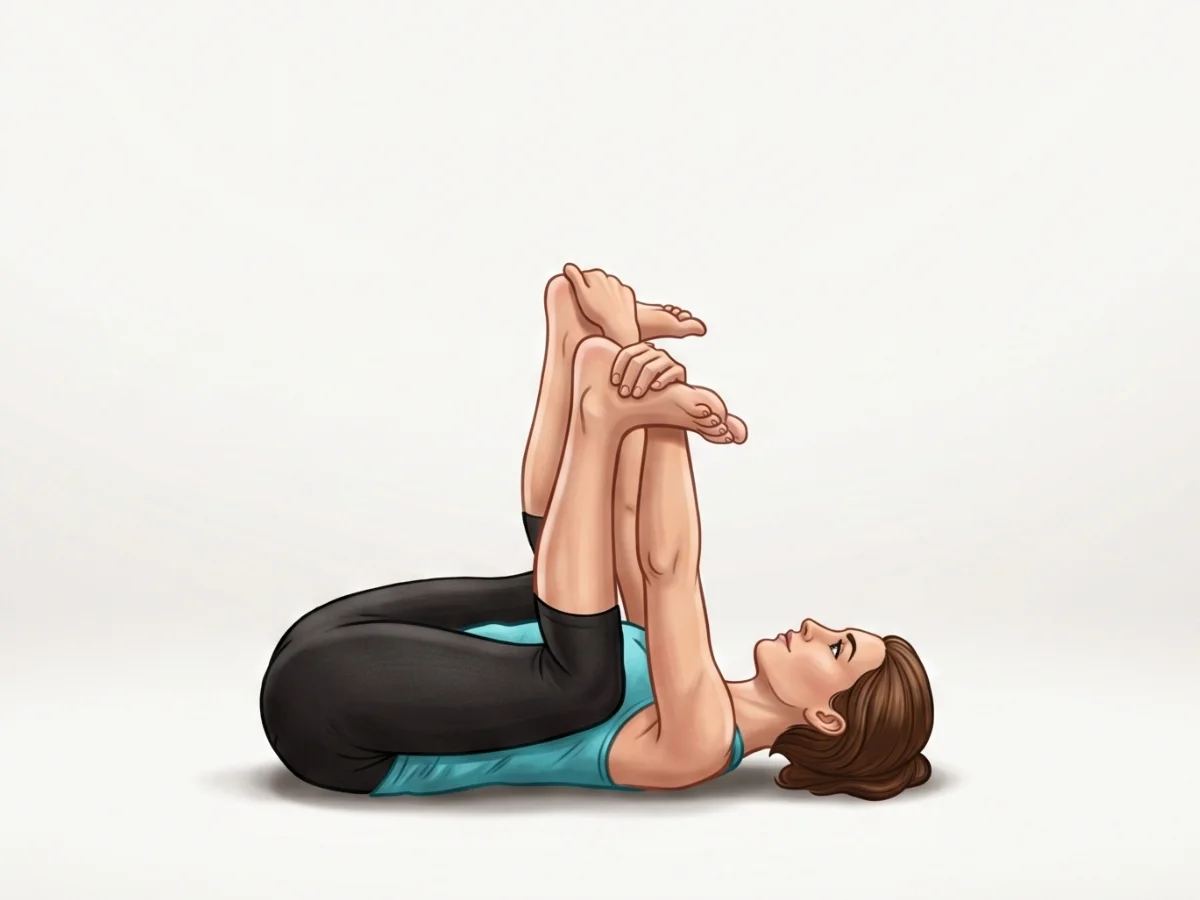
Happy Baby Pose
Ananda BalasanaServes as the foundational movement for drawing the knees back and opening the hips.
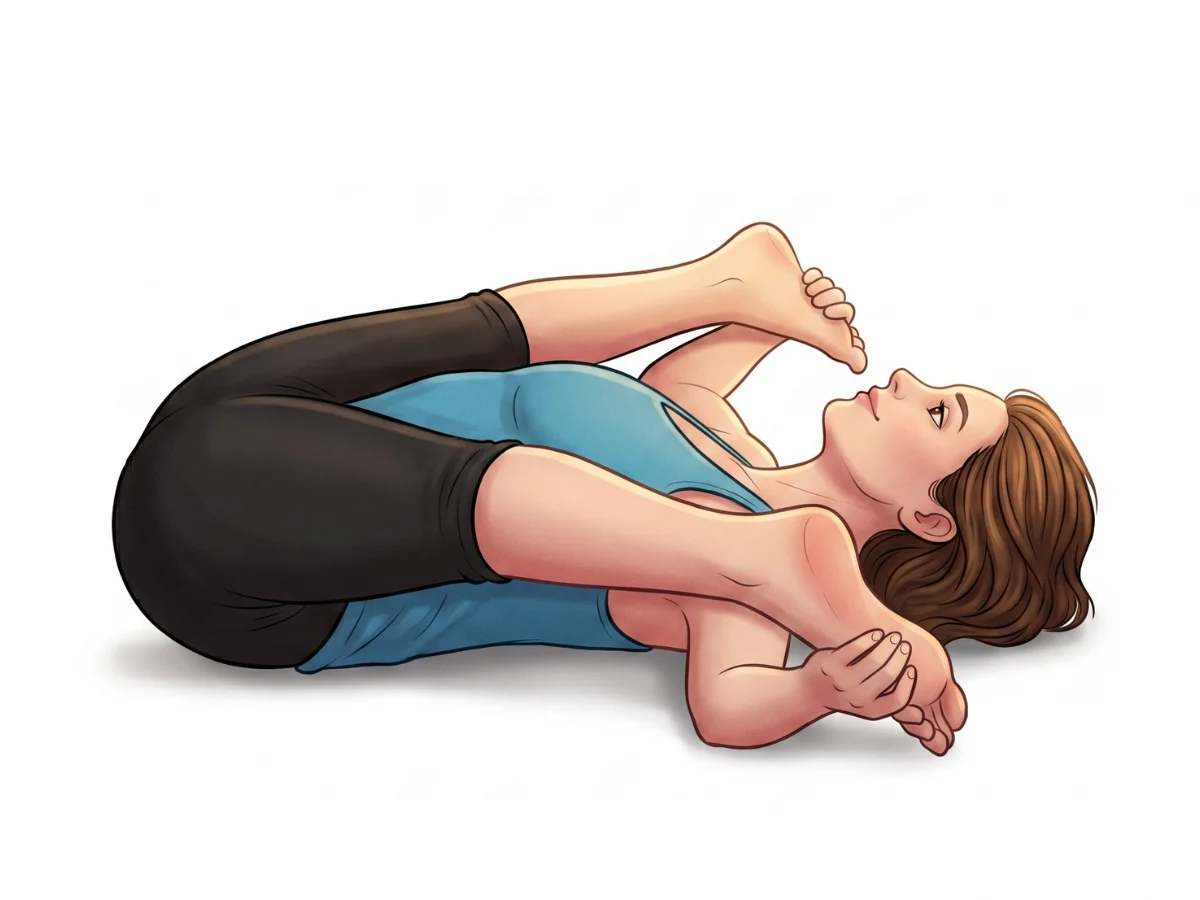
Supine Straddle
Supta KonasanaOpens the inner groins and prepares the adductors for extreme lengthening.
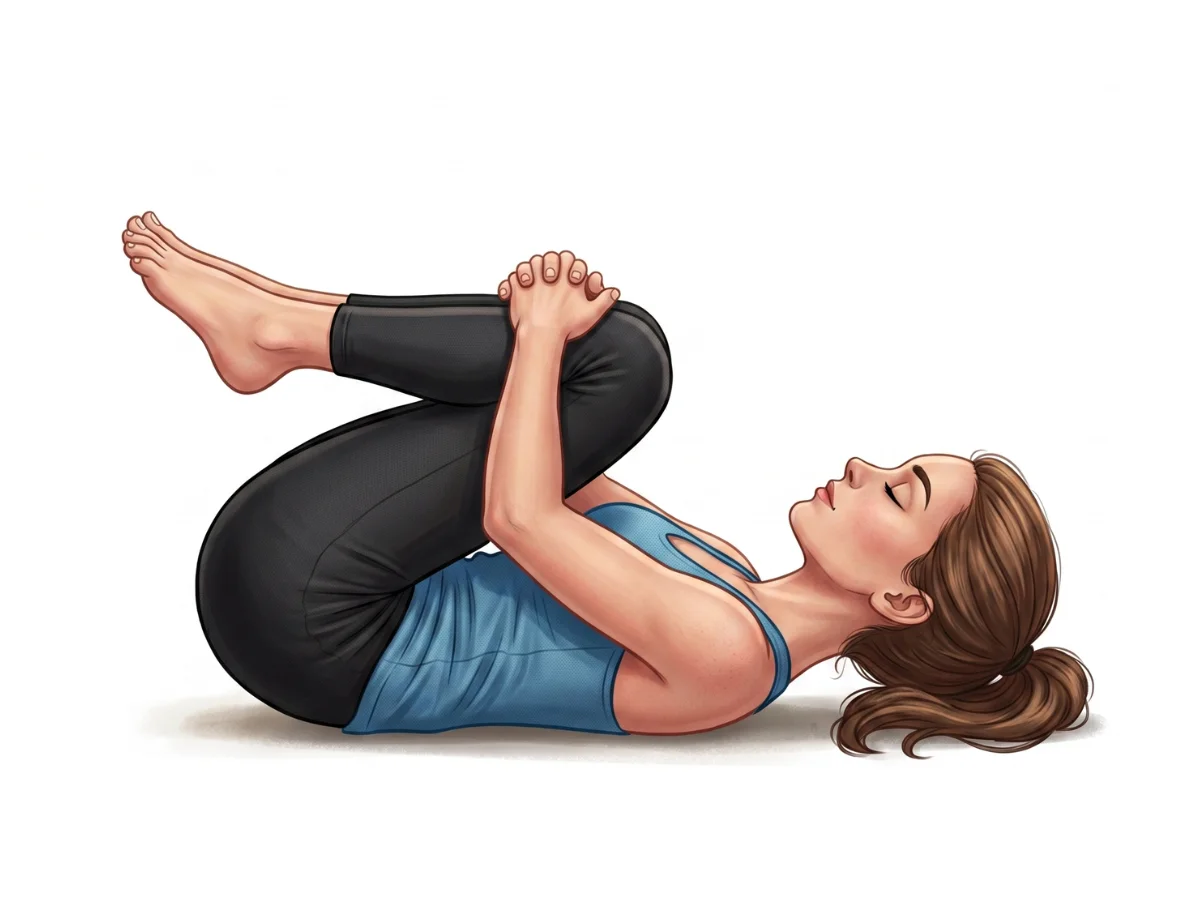
Wind Removing Pose
PavanamuktasanaPrepares the lower spine for deep flexion and compression.
Follow with neutralizing Counter-poses
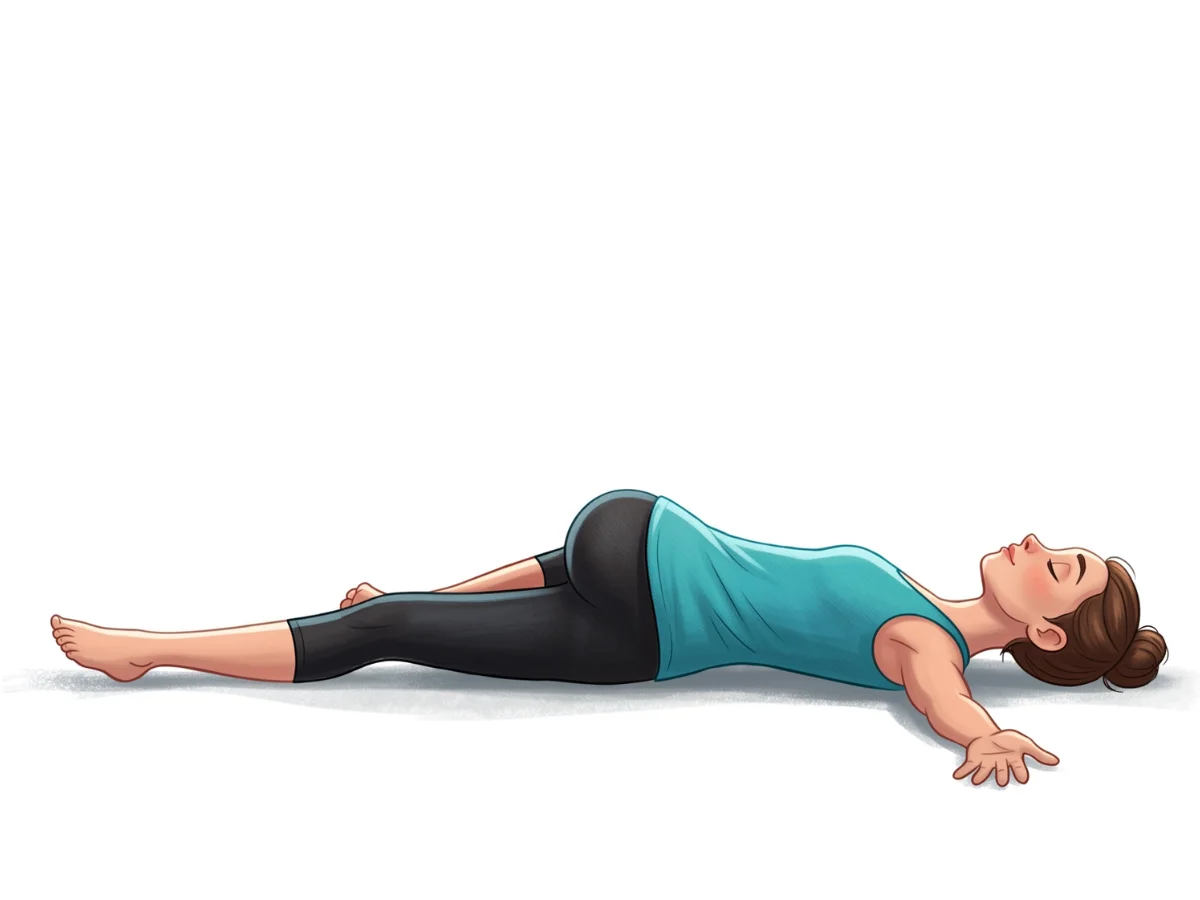
Supine Spinal Twist
Supta MatsyendrasanaGently rotates the spine to neutralize the intense forward flexion.
Wind Removing Pose
PavanamuktasanaA softer, symmetrical release for the lower back and hips.
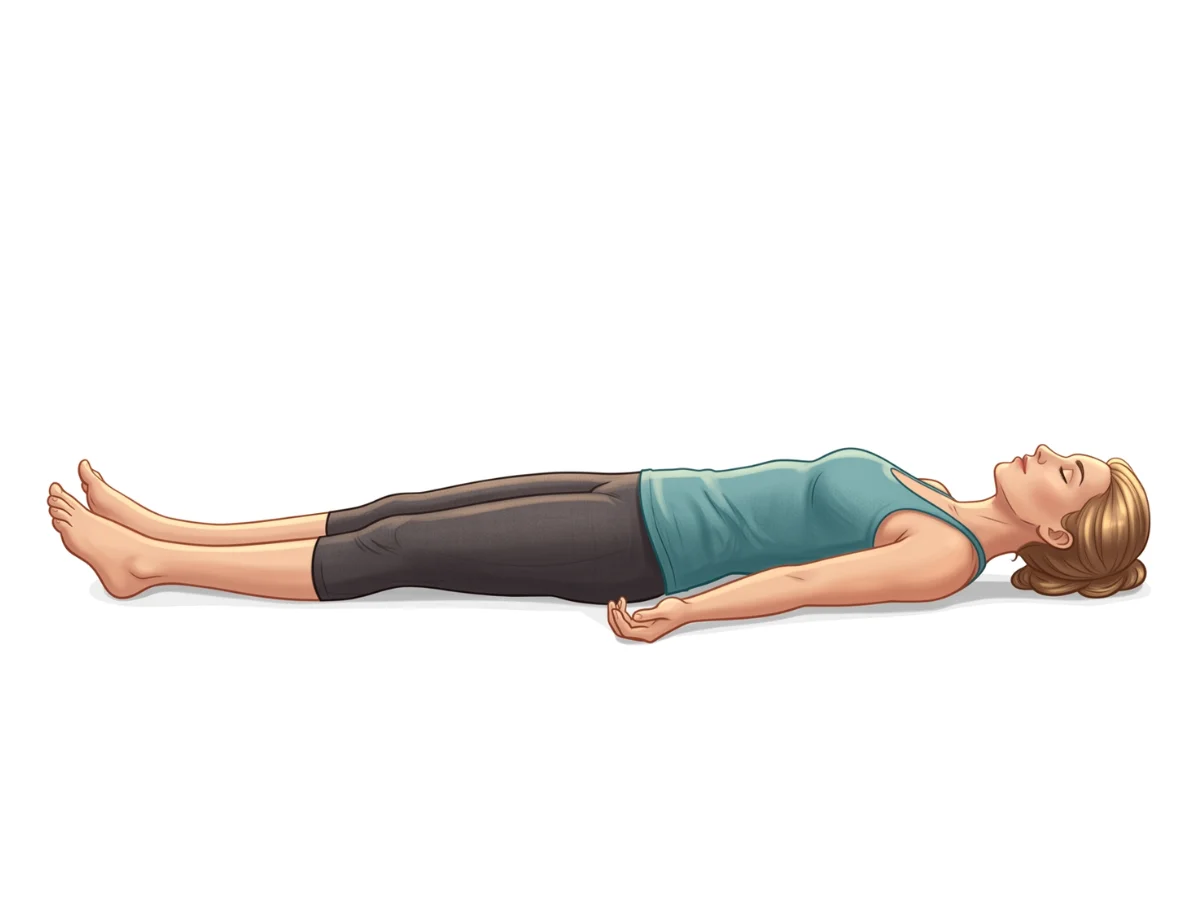
Corpse Pose
SavasanaAbsolutely essential for the nervous system to recover from the intense knot of the pose.
Frequently Asked Questions
How long does it take to learn this pose?
Sleeping Yogi is a master-level pose that can take years or even decades of consistent, safe hip-opening practice to achieve.
Is it dangerous for my neck?
It can be, if forced. The flexibility must come entirely from the hip socket. If your hips are open, the legs rest on the upper back/neck without crushing the cervical spine.
Why practice such an extreme pose?
In traditional Ashtanga and advanced Hatha practices, tying the body into this knot creates sensory deprivation (Pratyahara), forcing the mind into a deeply meditative, internalized state.
Elena Rostova is an accredited yoga educator and anatomy specialist with over 15 years of clinical experience. She focuses on functional biomechanics and injury prevention, translating complex anatomy into accessible guidance for safe, sustainable practice.
Read Full ProfileContinue Your Yoga Journey
Ready to deepen your practice? Explore our extensive library of poses, or join a structured program designed to build strength, flexibility, and mindfulness.