
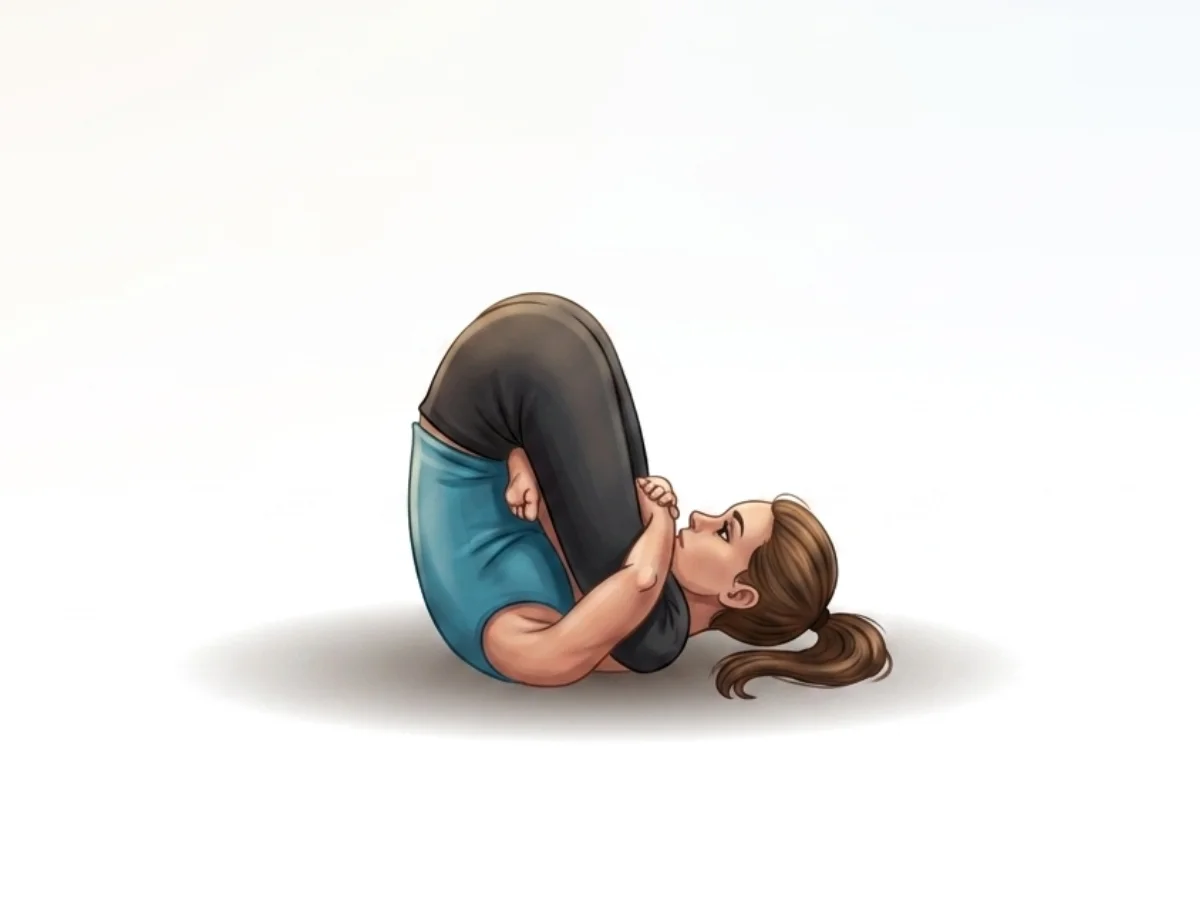
Embryo
Pindasana
By Elena Rostova Updated: verified Medically Reviewed
Embryo Pose (Pindasana) is a deeply introspective, advanced inversion traditionally practiced near the end of the Ashtanga Yoga closing sequence. From Shoulderstand with the legs bound in Lotus, the practitioner lowers their wrapped legs toward their face, wrapping the arms around the thighs to form a tight, compact shape resembling an embryo.
Hold Time
15–30 sec · 5–8 breaths
Pronunciation
pin-DAHS-anna
About Embryo
Often praised by experienced instructors, Embryo (Pindasana) acts as a powerful tool for finding balance and realignment. It primarily targets the spinal flexion & internal focus, helping to create length and strength exactly where you need it most. Over time, adding this to your routine is a great way to support deeply stretches the spine while calming the mind.
How to Practice
Shoulderstand Foundation
Begin in Supported Shoulderstand (Salamba Sarvangasana) with your hands securely supporting your lower back and legs reaching toward the ceiling.
Form the Lotus
Carefully bend your knees and fold your legs into Lotus Pose (Padmasana) while remaining inverted. If full Lotus is not accessible, you can cross your shins in a simple cross-legged position.
Lower the Legs
Exhale slowly as you hinge at the hips, lowering your bound legs down toward your face. Aim to bring your knees toward your ears or resting lightly on your forehead.
Balance and Wrap
Once your hips are deeply flexed and you feel stable balancing on your upper back and shoulders, release your hands from your lower back.
Bind the Thighs
Wrap your arms around the outside of your thighs. If possible, interlace your fingers or clasp your wrists together to secure the tight, embryonic shape.
Internal Focus
Draw your gaze inward. Breathe smoothly into your back ribs, allowing the intense forward fold to stretch the entire length of your spine.
Hold the Pose
Hold this compact posture for 5 to 8 deep breaths, focusing on the calming, cooling energy of the inversion.
Safe Release
To exit, release your arm bind, return your hands to your lower back for support, lift your legs back up to uncross them, and slowly roll your spine down to the floor.
Practice with the Yoga Timer
Keep track of your hold time and breath count for this pose.
Beginner Modifications & Prop Options
Yoga is a personal journey. These modifications and prop options allow you to adapt the pose to your current level of balance and flexibility, ensuring a safe and supportive practice.
Crossed Ankles (Sukhasana)
If full Lotus causes any strain in the knees, simply cross your shins or ankles and pull your knees toward your chest.
Tip: Focus on alignment rather than depth.
Keep Hands on the Back
Do not wrap your arms around your legs. Keep your hands firmly planted on your lower back to maintain stability and control the depth of the fold.
Tip: Focus on alignment rather than depth.
Embryo from the Floor (Child’s Variation)
Practice a non-inverted version by sitting in Lotus (or cross-legged) and folding forward over your legs, resting your forehead on the floor.
Tip: Focus on alignment rather than depth.
Benefits of Embryo
Deeply Stretches the Spine
The intense spinal flexion creates space between the vertebrae and deeply stretches the erector spinae muscles.
Calms the Nervous System
This deeply folded inversion stimulates the parasympathetic nervous system, lowering heart rate and reducing stress.
Massages Abdominal Organs
The compression of the thighs against the belly stimulates digestion and massages the internal organs.
Opens Hips and Knees
Holding Lotus while inverted requires and builds significant flexibility in the hips, knees, and ankles.
Enhances Focus and Withdrawal
Encourages Pratyahara (withdrawal of the senses) by physically closing off the body to external stimuli.
Common Mistakes to Avoid
Mistake: Forcing the Lotus Bind
How to fix: Never force your knees into Lotus, especially while upside down where you have less control. Always modify if you feel any tweaking in the knee joint.
Mistake: Turning the Head
How to fix: Never turn your head from side to side while in this or any shoulderstand variation, as it can cause severe injury to the cervical spine.
Mistake: Rolling Too Far Back
How to fix: If you lose balance and roll backward out of the pose, tuck your chin firmly to your chest to protect your neck as you roll to the floor.
Safety and Precautions
Neck or Cervical Spine Injuries
The intense flexion and weight-bearing on the upper spine is highly dangerous for anyone with neck issues.
Knee Injuries
The Lotus position places rotational stress on the knees; those with meniscus tears or ligament issues should avoid the full bind.
High Blood Pressure or Glaucoma
Inversions significantly increase pressure in the head, chest, and eyes.
Pregnancy
The intense abdominal compression and inversion risks make this pose unsuitable for pregnant practitioners.
Medical Disclaimer: If you have any of the above conditions, consult your doctor or a qualified yoga instructor before attempting this pose.
Muscles Worked in Embryo
Embryo demands synchronized muscular effort, creating a profound sense of engagement and release throughout the body. The activation of the primary muscles supports the structure, while the secondary muscles provide stability and balance.
Primary Muscles
Erector Spinae
Stretch deeply along the entire length of the back.
Gluteus Maximus
Stretch to accommodate the deep hip flexion.
Rhomboids & Trapezius
Bear weight and stretch as the back rounds.
Secondary Muscles
Rectus Abdominis
Compress to help pull the legs closer to the chest.
Hip External Rotators
Stretch deeply to maintain the Lotus position.
Anterior Neck Muscles
Contract slightly to protect the throat and airway.
Poses to Practice Before and After Embryo
Prepare with these Poses
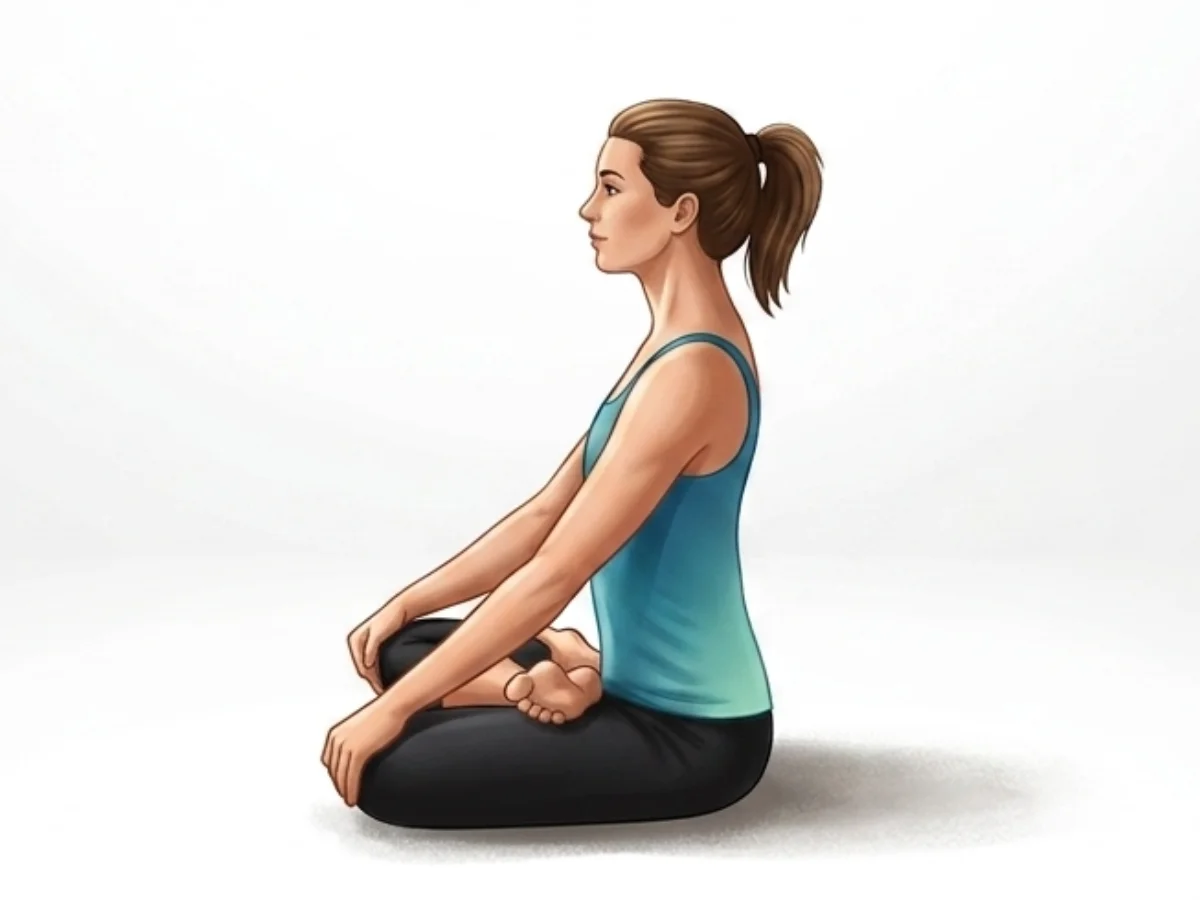
Lotus
PadmasanaOpens the hips and prepares the knees for the deep bind required in Embryo.
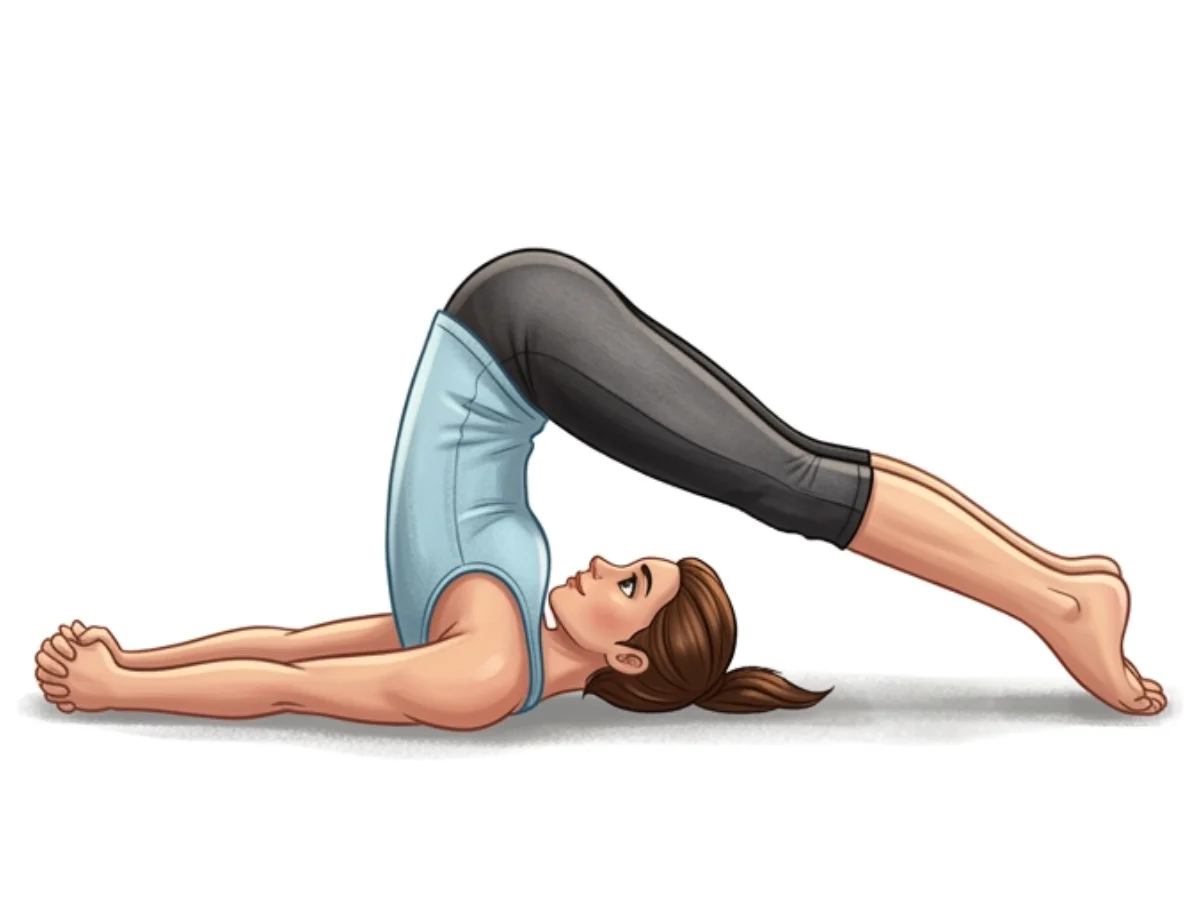
Plow Pose
HalasanaEstablishes the deep spinal flexion and neck position needed before bringing the legs in.
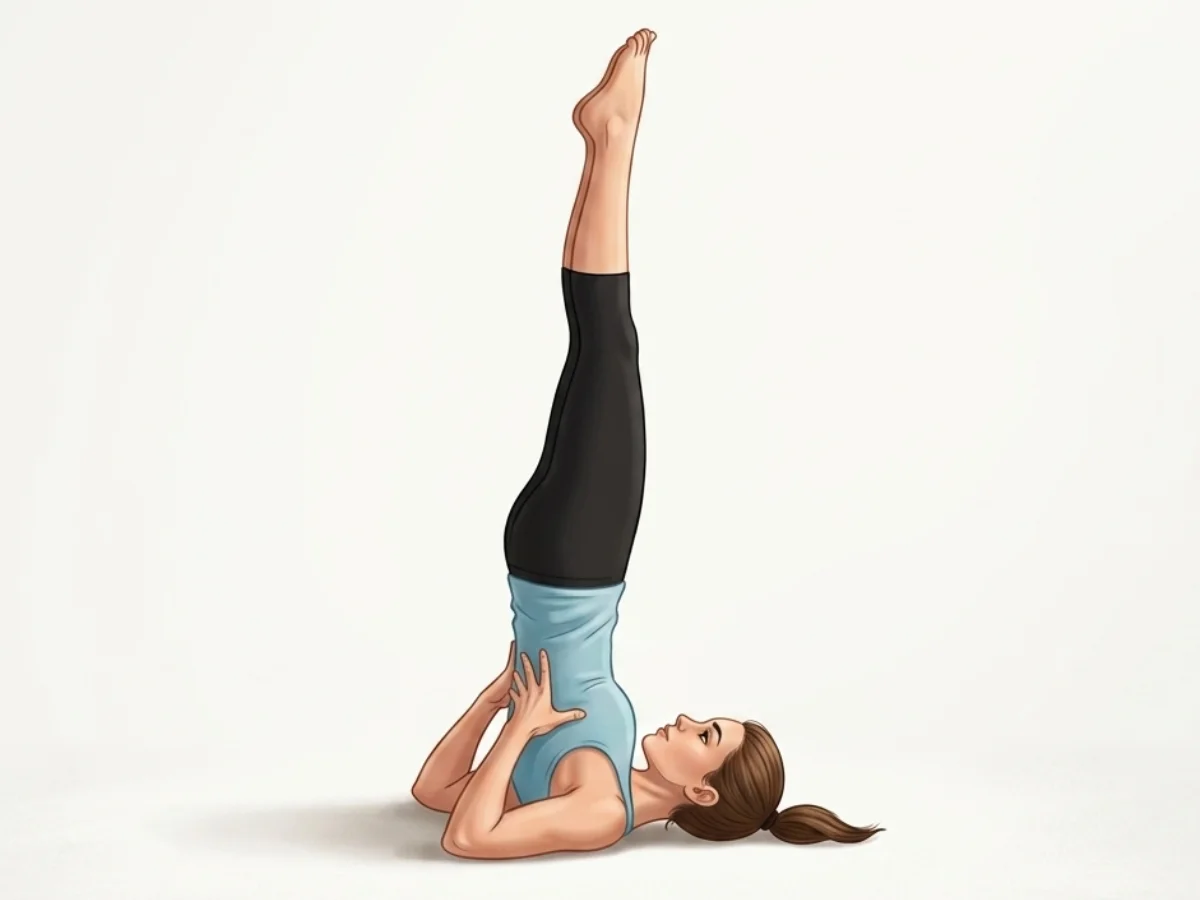
Supported Shoulderstand
Salamba SarvangasanaThe foundational inversion from which Embryo pose is entered.
Follow with neutralizing Counter-poses
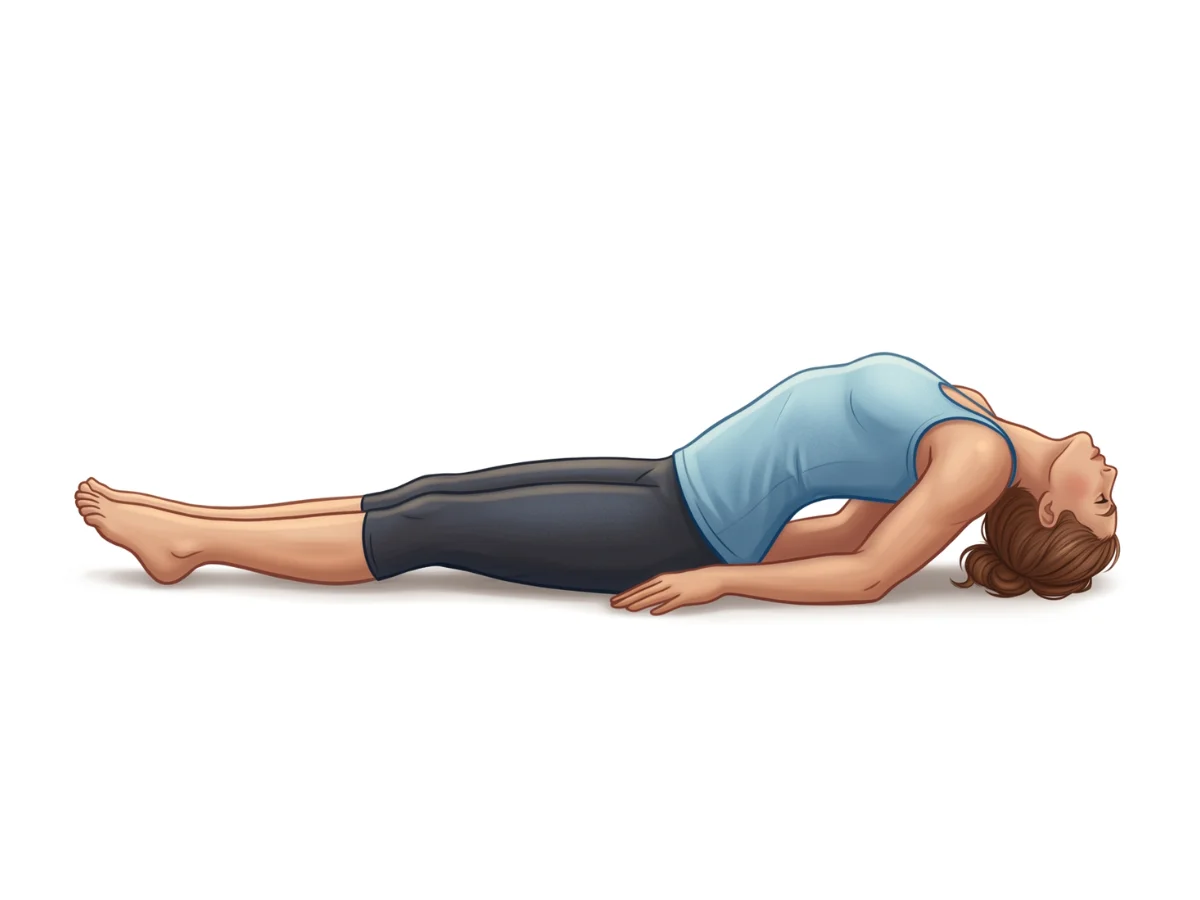
Fish Pose
MatsyasanaDirectly counters the deep forward neck flexion by extending the cervical spine and opening the chest.
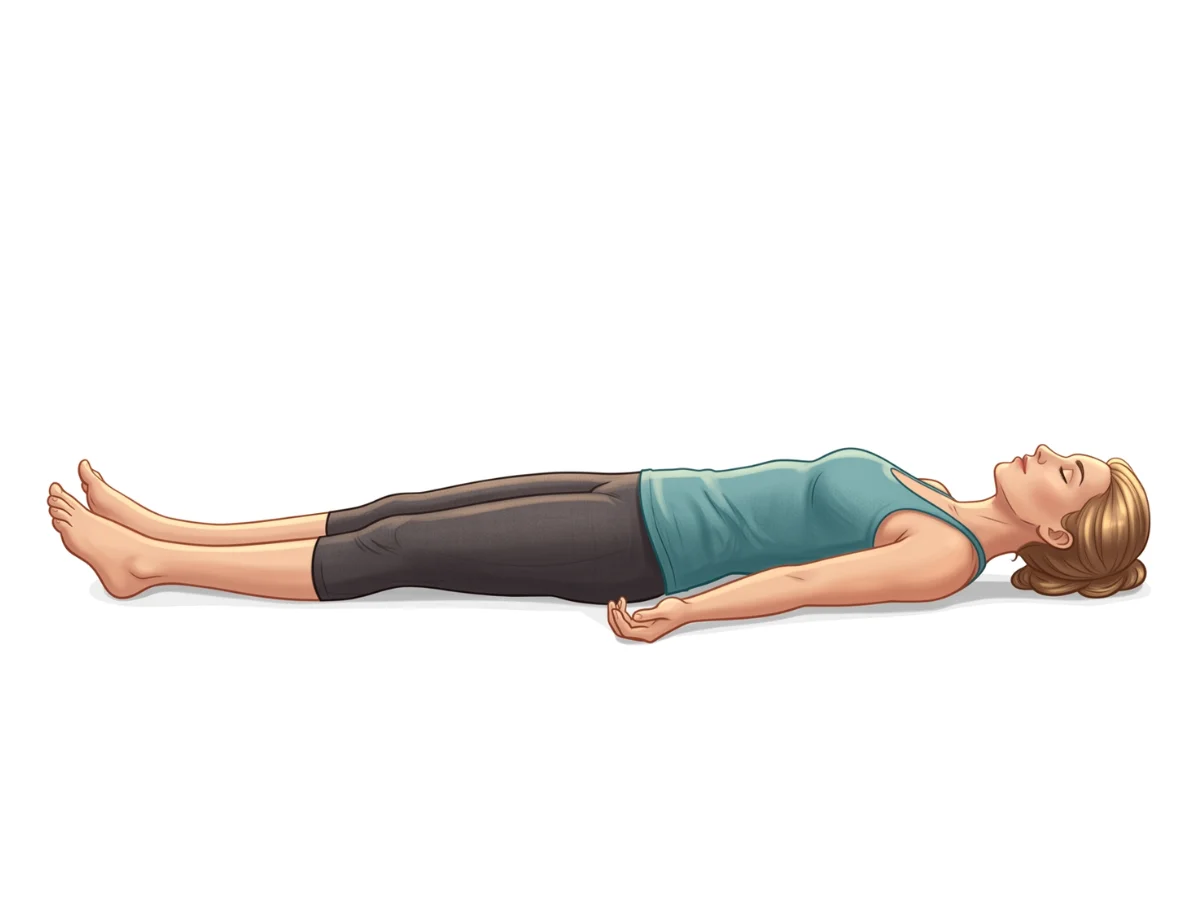
Corpse Pose
SavasanaAllows the spine to neutralize completely and the nervous system to settle.
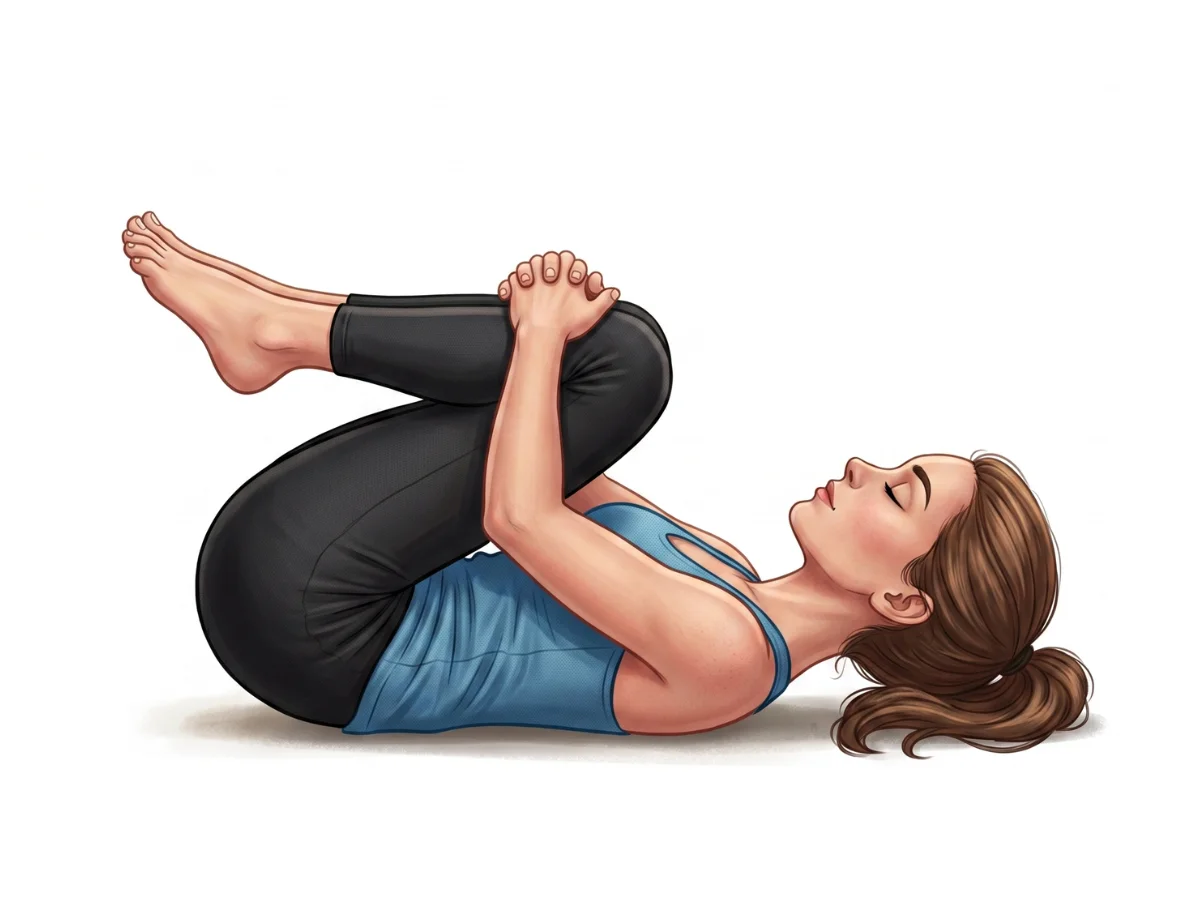
Wind-Removing Pose
PavanamuktasanaGently releases the lower back in a safe, supine position after intense spinal stretching.
Frequently Asked Questions
How do I balance when releasing my hands?
Balancing in Pindasana requires finding the exact center of gravity on your upper back. Move slowly; engage your core deeply, and only release one hand at a time until you feel completely stable.
Is it normal to feel breathless in this pose?
Yes, the deep abdominal compression and the throat lock (Jalandhara Bandha) naturally restrict the breath. Focus on taking short, shallow breaths into the back of your ribcage.
What if I can’t do Lotus?
You can still get the benefits of the inversion and spinal stretch by crossing your ankles comfortably (Sukhasana) and drawing your knees toward your ears.

Elena Rostova is an accredited yoga educator and anatomy specialist with over 15 years of clinical experience. She focuses on functional biomechanics and injury prevention, translating complex anatomy into accessible guidance for safe, sustainable practice.
Read Full ProfileContinue Your Yoga Journey
Ready to deepen your practice? Explore our extensive library of poses, or join a structured program designed to build strength, flexibility, and mindfulness.