
Seated Three Limbed Forward Bend
Trianga Mukha Eka Pada Paschimottanasana
By Elena Rostova Updated: verified Medically Reviewed
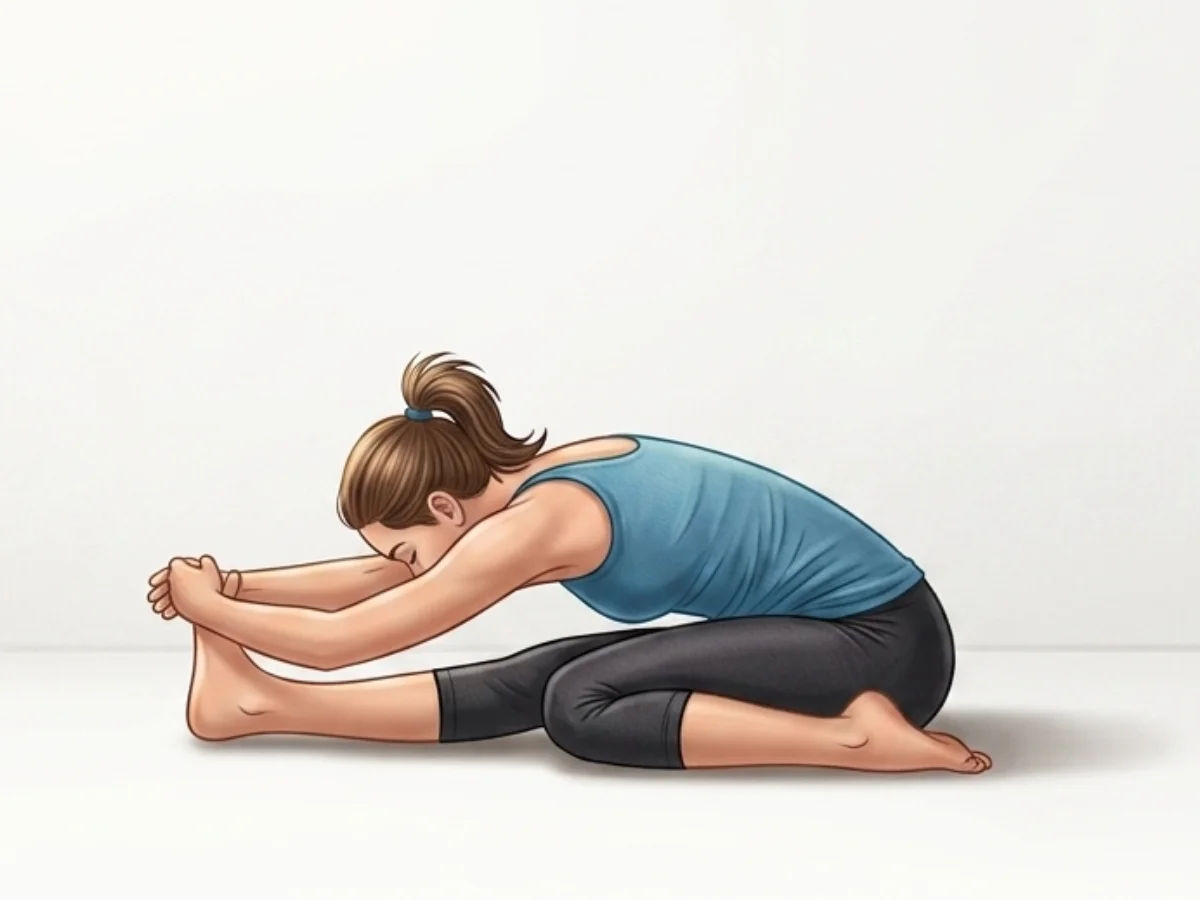
Seated Three Limbed Forward Bend (Trianga Mukha Eka Pada Paschimottanasana) is a challenging asymmetric fold that combines deep hamstring extension on one leg with intense quadriceps stretching on the other. By folding one leg backward into a Half Hero (Ardha Virasana) position and extending the other straight forward, the practitioner must overcome a strong tendency to lean to one side.
Hold Time
30�60 sec � 5�10 breaths
Pronunciation
tree-AHNG-gah MOO-kah eh-kah PAH-dah pah-shee-moh-tahn-AHS-anna
About Seated Three Limbed Forward Bend
Commonly practiced as Seated Three Limbed Forward Bend (Trianga Mukha Eka Pada Paschimottanasana), this dynamic posture is beautifully designed to help unlock tension. As you settle into the shape, it gently works the asymmetric hamstring & quad stretch to increase your overall flexibility. Over time, adding this to your routine is a great way to support simultaneous quad and hamstring stretch while calming the mind.
How to Practice
Start in Staff Pose
Begin seated on your mat in Staff Pose (Dandasana) with both legs fully extended in front of you and your spine tall.
Fold into Half Hero
Shift your weight slightly to the left. Bend your right knee and fold your right leg backward, placing the top of your right foot flat on the floor beside your right hip. Keep your right knee pointing straight forward.
Square Your Hips
Level your pelvis. You will naturally want to lean heavily to the left away from the folded leg. Actively ground your right sitting bone back down toward the mat to square your hips and shoulders.
Inhale and Reach
Flex the foot of your extended left leg. Inhale deeply as you raise both arms overhead, elongating your spine and lifting your ribcage out of your pelvis.
Hinge Forward
Exhale slowly as you hinge forward from the hips, keeping your spine straight. Reach your hands to grasp the foot, ankle, or shin of your straight left leg.
Deepen the Fold
Inhale slightly to pull your chest forward and flatten your upper back. Exhale to fold deeper, aiming to bring your belly to your thigh, chest to your knee, and chin to your shin.
Maintain Balance
As you fold, continue to press weight into your right (folded leg) hip. The challenge of the pose is maintaining equal weight distribution across both sitting bones.
Hold and Breathe
Hold the posture for 5 to 10 deep Ujjayi breaths. Soften your neck and shoulders, allowing gravity and your exhales to ease you deeper into the stretch.
Release Upward
To exit the pose safely, inhale as you extend your arms forward and lift your torso upright with a strong core and flat back.
Straighten the Leg
Lean slightly to the left, use your hand to carefully help your right leg unfold, and return to Staff Pose. Repeat the sequence on the opposite side.
Practice with the Yoga Timer
Keep track of your hold time and breath count for this pose.
Beginner Modifications & Prop Options
Yoga is a personal journey. These modifications and prop options allow you to adapt the pose to your current level of balance and flexibility, ensuring a safe and supportive practice.
Sit on a Block or Blanket
Place a folded blanket or low block under the sitting bone of the straight leg to even out the pelvis and relieve pressure on the folded ankle.
Tip: Focus on alignment rather than depth.
Use a Yoga Strap
Loop a strap around the ball of the straight foot and hold it with both hands to maintain a long, straight spine as you fold.
Tip: Focus on alignment rather than depth.
Roll the Calf Muscle
Manually roll the flesh of your calf muscle outward away from the knee joint before sitting back to create physical space and reduce compression.
Tip: Focus on alignment rather than depth.
Benefits of Seated Three Limbed Forward Bend
Simultaneous Quad and Hamstring Stretch
Uniquely targets the quadriceps and shin of the folded leg while intensely stretching the hamstrings and calf of the extended leg.
Corrects Pelvic Imbalances
Forcing the body to square forward while asymmetrically aligned highlights and helps correct lateral imbalances in the pelvis and lower back.
Maintains Knee Joint Health
When done correctly, the deep flexion of the bent leg helps maintain synovial fluid circulation and flexibility in the knee joint and ankle.
Stimulates Abdominal Circulation
The pressure of the thigh against the abdomen during the fold massages internal organs, stimulating sluggish digestion.
Strengthens Core Stabilizers
Resisting the urge to lean sideways requires constant isometric engagement of the obliques and transverse abdominis.
Common Mistakes to Avoid
Mistake: Leaning Heavily to One Side
How to fix: Consciously ground down through the sitting bone of the bent leg. If you cannot do this without pain, you must use a prop under the straight-leg hip.
Mistake: Flaring the Bent Knee Outward
How to fix: Keep the folded knee hugging closely to the straight knee, pointing directly forward.
Mistake: Sickling the Folded Foot
How to fix: Ensure the top of the foot rests flat on the floor with all five toes pointing straight back behind you.
Safety and Precautions
Knee Injuries
The deep flexion and slight internal rotation of the folded knee are strictly contraindicated for anyone with meniscus tears or severe knee joint instability.
Ankle Sprains
The plantar flexion required for the folded foot can aggravate recovering ankle sprains or tight anterior tibialis tendons.
Sciatica
The asymmetric forward folding can compress the sciatic nerve, triggering shooting pains down the leg.
Lower Back Herniations
Deep forward folds with a potentially unlevel pelvis can be highly destabilizing for lumbar disc issues.
Medical Disclaimer: If you have any of the above conditions, consult your doctor or a qualified yoga instructor before attempting this pose.
Muscles Worked in Seated Three Limbed Forward Bend
Seated Three Limbed Forward Bend demands synchronized muscular effort, creating a profound sense of engagement and release throughout the body. The activation of the primary muscles supports the structure, while the secondary muscles provide stability and balance.
Primary Muscles
Hamstrings (Straight Leg)
Stretch deeply along the back of the extended leg.
Quadriceps (Bent Leg)
Undergo an intense stretch across the front of the thigh.
Erector Spinae
Lengthen to support the forward spinal extension.
Secondary Muscles
Tibialis Anterior
Stretches deeply over the front of the shin on the bent leg.
Obliques
Engage isometrically to prevent the torso from leaning to the side.
Latissimus Dorsi
Stretch as the arms reach forward to grasp the foot.
Poses to Practice Before and After Seated Three Limbed Forward Bend
Prepare with these Poses
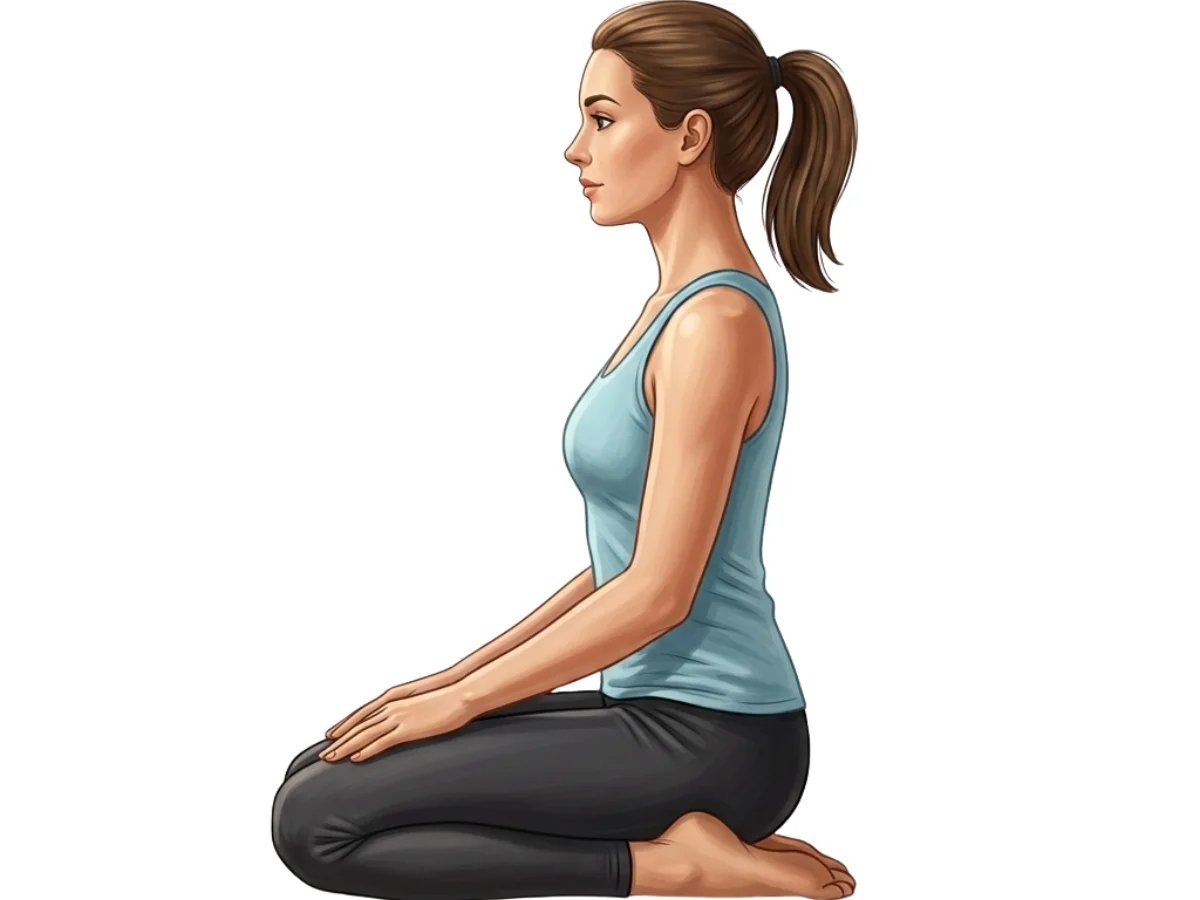
Hero Pose
VirasanaPrepares the knees, ankles, and quadriceps for the deep backward folding action.
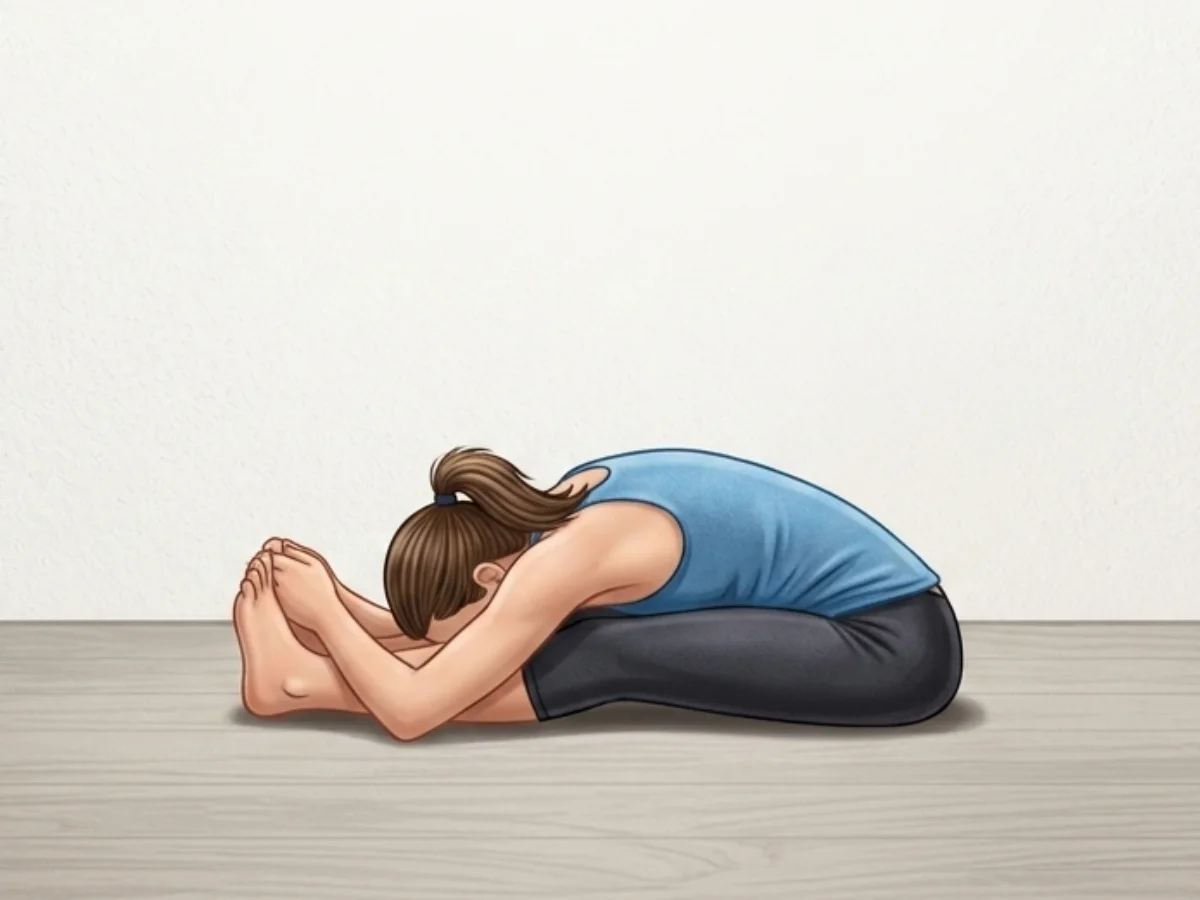
Seated Forward Bend I
Paschimottanasana AWarms up the hamstrings symmetrically before introducing the asymmetric challenge.
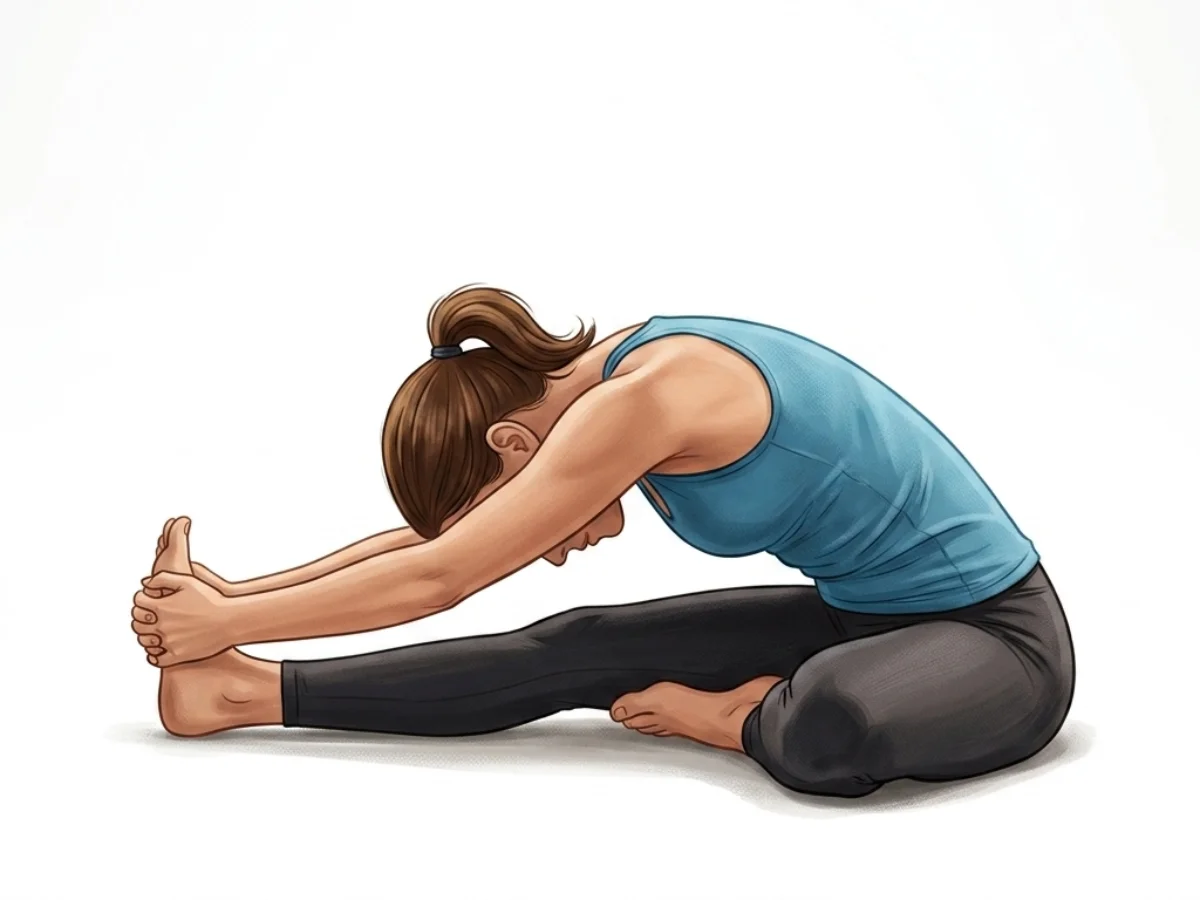
Head to Knee I
Janu Shirshasana AA gentler asymmetric forward fold that opens the hips and hamstrings safely.
Follow with neutralizing Counter-poses
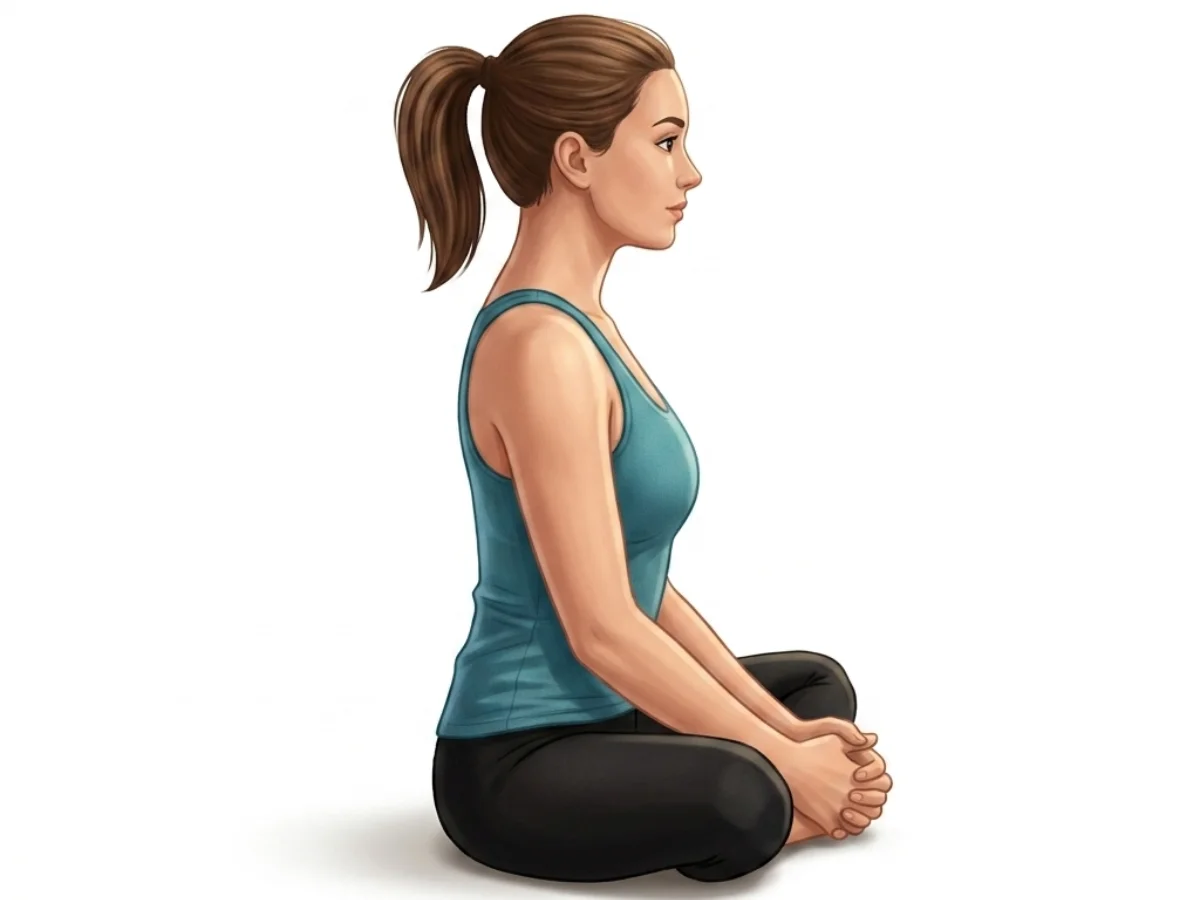
Bound Angle
Baddha KonasanaNeutralizes the hips with a symmetrical external rotation after intense asymmetric work.
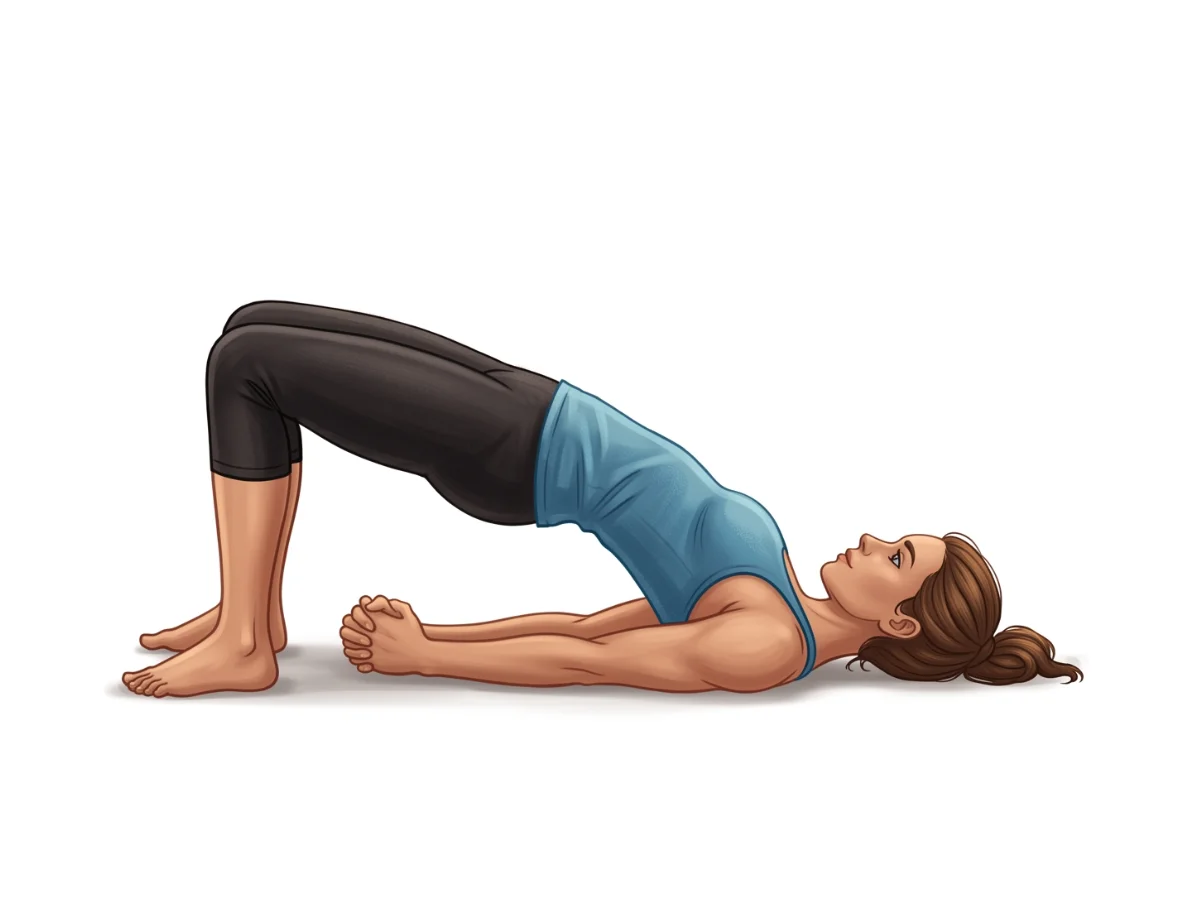
Bridge Pose
Setu Bandha SarvangasanaA gentle backbend that stretches the hip flexors and front body to counter the deep fold.
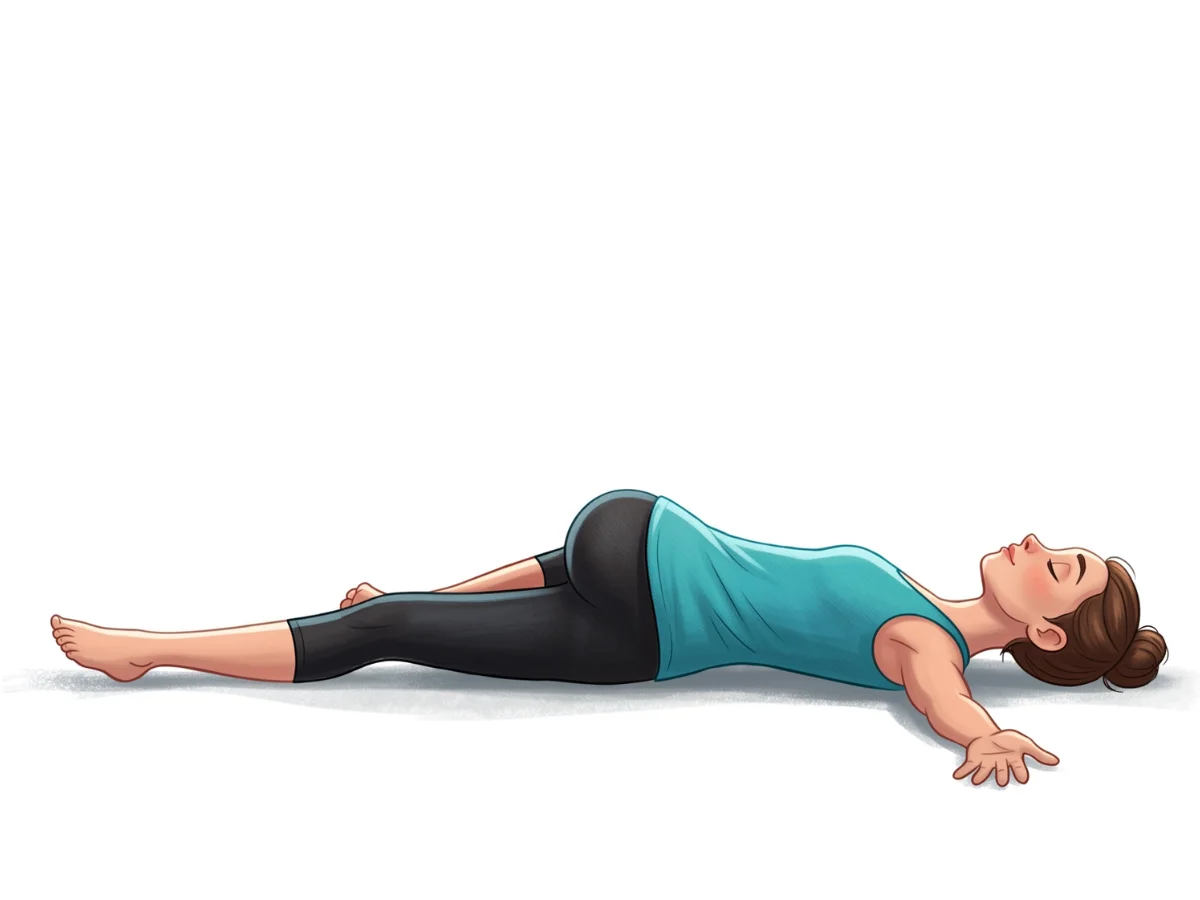
Supine Spinal Twist
Supta MatsyendrasanaA restorative twist that relieves any lingering tension in the lumbar spine.
Frequently Asked Questions
What does "Trianga Mukha Eka Pada" mean?
In Sanskrit, "Trianga" means three limbs or parts, "Mukha" means face, "Eka" means one, and "Pada" means leg or foot. It translates roughly to Three-Limbed Face to One Leg Forward Bend, referencing the feet, knees, and buttocks as the three parts.
My folded knee hurts intensely. What should I do?
Stop immediately. Knee pain is not a stretch you should push through.
Why do I fall over to one side?
Because your bent leg is elevated by the bulk of your calf and foot, your pelvis is uneven. Your body naturally tilts away from the higher side.
Elena Rostova is an accredited yoga educator and anatomy specialist with over 15 years of clinical experience. She focuses on functional biomechanics and injury prevention, translating complex anatomy into accessible guidance for safe, sustainable practice.
Read Full ProfileContinue Your Yoga Journey
Ready to deepen your practice? Explore our extensive library of poses, or join a structured program designed to build strength, flexibility, and mindfulness.